
Blog24 min read
Document AI Vendor Testing: An 80/20 Edge-Case Template
Vendor demos use clean samples. Test with 80% standard and 20% problem documents: skewed scans, handwriting, multi-page tables, scored field by field.
Read article
Blog
Field notes on shipping AI-native systems with human engineering judgement: architecture, modernisation, automation, and the tradeoffs in between.
Vendor demos use clean samples. Test with 80% standard and 20% problem documents: skewed scans, handwriting, multi-page tables, scored field by field.

OCR is fast and cheap on fixed layouts like forms and IDs. LLMs handle contracts, handwriting and variable structure. When to use each, or run both.

Twelve checks before RAG goes live: chunking on real documents, Precision@5, 95%+ citation accuracy, and p95 retrieval under 150ms.

Published SLM benchmarks skip what breaks apps: runtime memory above the stated model size, thermal throttling under sustained load, and cold-start delay.
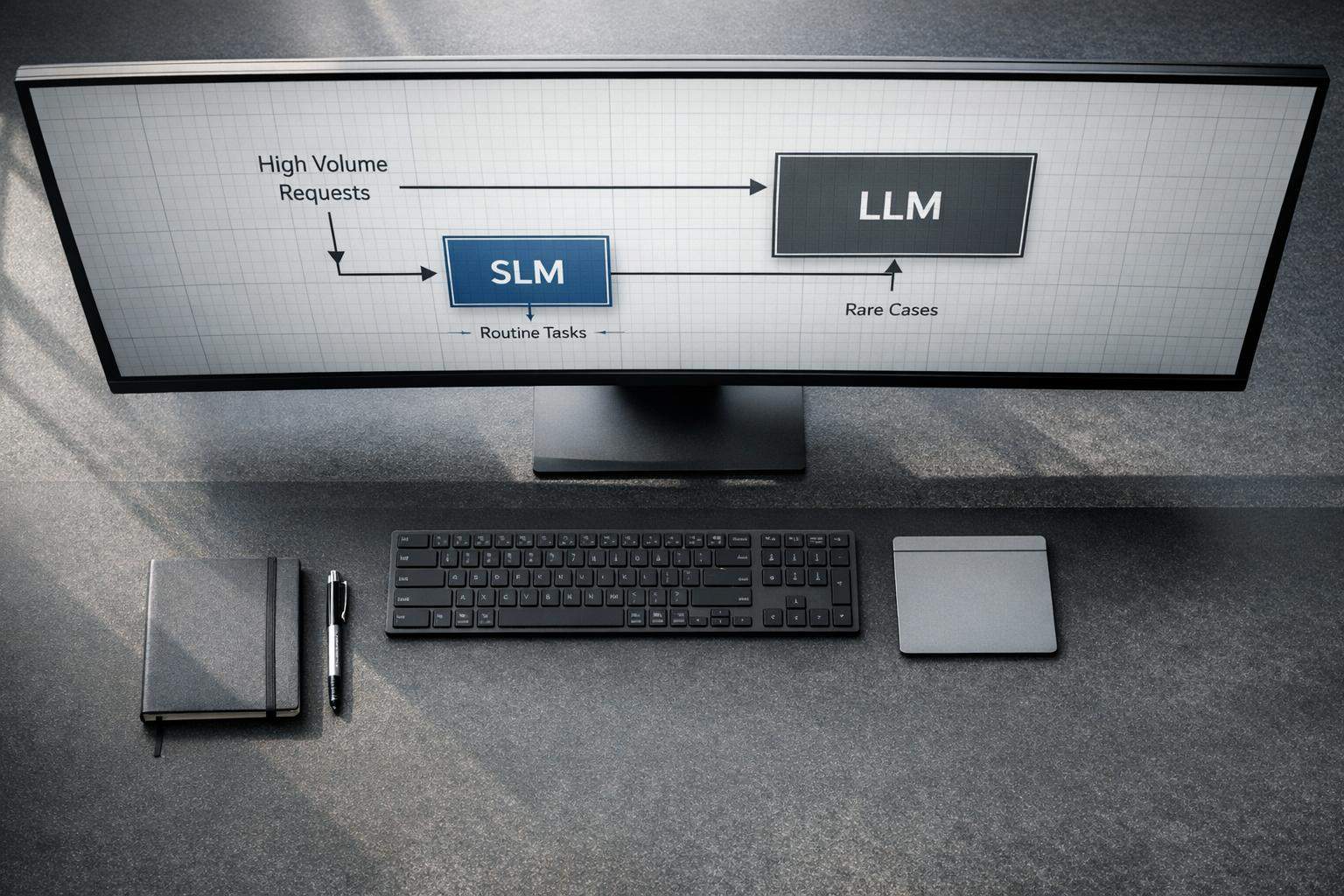
Learn how to audit AI features to move predictable, high-volume tasks to small language models without harming UX.

Match models to tasks to cut AI costs-use SLMs for structured, high-volume work and reserve GPT‑4 for complex or multilingual cases.

Enterprises require SLMs for data sovereignty, compliance, security, and cost savings; vendors must offer self-hosted, VPC, or on‑prem options.

Architecture, cost, quantization, and compliance trade-offs for self-hosting language models in regulated industries.

Pick the right enterprise LLM by matching precision, context length, and throughput to your workflow.

Stress-test agent frameworks early: add observability, reproducible tests, run five critical stress tests, and know when to switch.

Why multi-agent demos break in production: compounded errors, deadlocks, context loss and token bloat, plus the checkpointing and tracing that fix them.

How week-one memory choices set an AI agent’s scalability; compare in-context, vector, episodic, semantic memories and tiered designs.