Construction & AEC Platform Engineering
Platforms built for how construction actually works.
Construction and engineering environments rely on complex coordination across many stakeholders. Project teams, contractors, engineers, and site operators all depend on accurate data and structured workflows to manage projects effectively.
The problem
Software products that ignore the site
Many construction platforms struggle because they are designed primarily as software products rather than operational tools. Systems that work well in controlled environments often fail to support the realities of construction workflows.
Project information is fragmented across multiple tools.
Field teams struggle to adopt existing software platforms.
Large datasets slow down system performance.
Coordination between stakeholders is difficult.
Operational processes still depend on manual reporting.
Why this is hard
Why construction platforms often fail
Stage 01
Features over field reality
Platforms that prioritise features without considering how teams work in real environments struggle with adoption.
Stage 02
The field isn’t the office
Field conditions demand systems that are simple to use and reliable under varying, unpredictable conditions.
Stage 03
Data and workflows at scale
Systems must handle large project datasets and integrate with existing workflows to be genuinely useful.
How we work
How AlterSquare builds AEC platforms
Workflow-centric platform design
We analyse project workflows across design, construction, and reporting so the platform supports real operational needs, which improves adoption across stakeholders.
Systems designed for large project data
Construction projects generate large volumes of drawings, site updates, and operational records. We engineer systems that handle complex datasets while maintaining performance and usability.
AI-assisted operational insights
AI can extract insights from project data, automate reporting, and improve decision-making, implemented carefully so it supports existing workflows rather than adding complexity.
Built around operations, engineered to scale
We start from real project workflows, then engineer for the data volumes and field conditions construction platforms actually face.
- 01
Understand the workflow
Study how design, construction, and reporting processes operate across stakeholders.
- 02
Design for adoption
Shape the platform around field and office users so it’s genuinely used.
- 03
Engineer for scale
Build systems that handle large project datasets without degrading performance.
- 04
Integrate & extend
Connect with existing tools and add AI-assisted insights where they support operations.
When this makes sense
Where this applies
Organisations are building digital platforms for construction workflows.
Existing platforms struggle with performance or scalability.
Project coordination requires better system integration.
Construction data must be structured and accessible across teams.
Organisations are exploring PropTech solutions for operational efficiency.
Outcome + differentiation
What you gain, and why AlterSquare
What this delivers
- Platforms aligned with real construction workflows
- Improved adoption across project stakeholders
- Reliable performance with large datasets
- Better visibility across project operations
- Systems designed to scale across projects
Why AlterSquare
- Experience building operational software platforms
- Engineering approach focused on workflow alignment
- Scalable architecture for complex datasets
- AI-native engineering capabilities
Proof
Where we've done this before
Client systems built with exactly this kind of work, measured by what changed for the business.
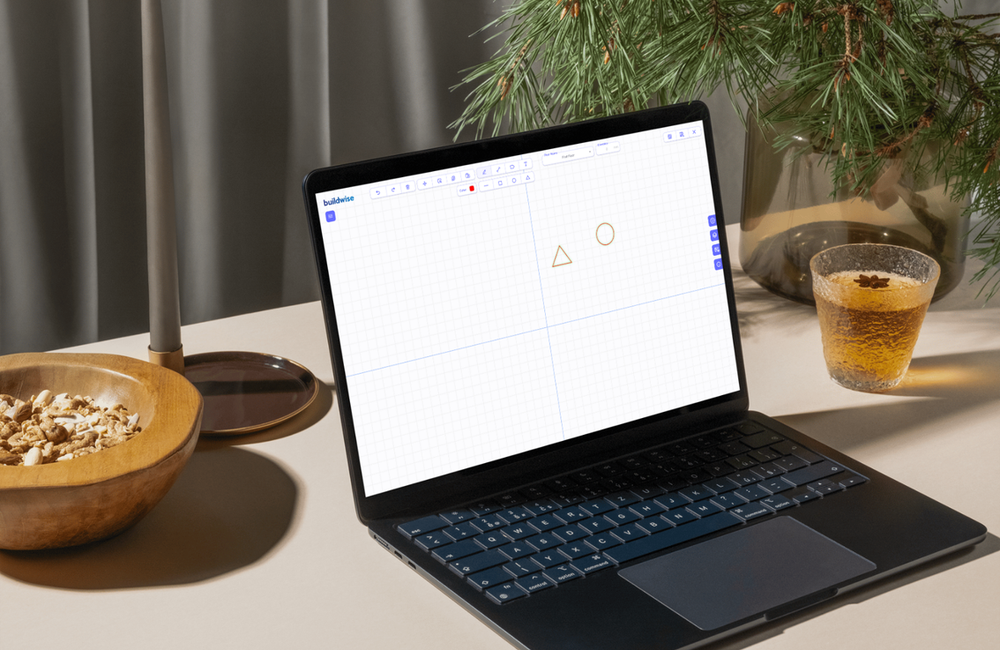 Construction · MEP design75%design time reduction
MEP design, moved from desktop CAD to the browser
A device-agnostic MEP design platform that freed consultants from desktop CAD, cutting design time by 75% and BOQ generation by 90%.
Read case study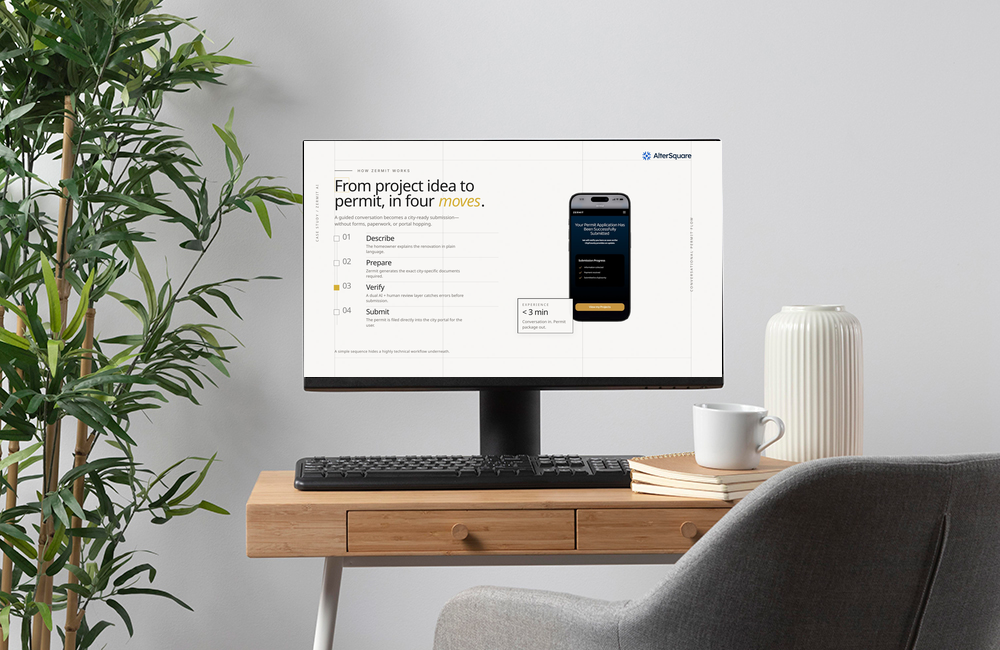 PropTech · AI permits<3 minfrom project intent to city-ready filing
The conversational layer for US residential building permits
We architected the AI stack behind Zermit, collapsing fragmented city permit filing into a guided 3-minute conversation.
Read case study
FAQ
Frequently asked questions
Can these platforms integrate with existing construction tools?
Yes. Construction platforms often integrate with existing project management tools, document systems, and operational software.
Will field teams be able to use these systems easily?
User experience is a key design consideration. Platforms are designed to support both field and office users.
Can the platform scale across multiple projects?
Yes. Systems are designed to support multiple projects and stakeholders without performance degradation.
Do these platforms support visualisation or 3D models?
Yes. In some cases, platforms may include advanced visualisation capabilities or integrate with 3D environments.
Product teams and technology leaders who ship with us.






Partners, not justvendors.
What the product teams and technology leaders we build with say about working alongside us.
We value our relationship with AlterSquare. They’ve proven themselves to be capable and willing partners in numerous development projects. Their ability to code in many environments gives us confidence in handling new business opportunities.
 Pulkit AgarwalDirector · Kennect Inc
What truly stands out is their capability to tackle complex and technical tasks. Over four years of collaboration, Taher’s expertise and AlterSquare’s skill set have been instrumental in helping us overcome every hurdle, a true tech partner in every sense of the word.
 Prakhar GoyalCo-Founder & Head of Product · Foyr Inc
Under Taher’s exceptional leadership, AlterSquare consistently delivered outstanding development resources. This invaluable support played a crucial role in enabling us to innovate rapidly, launch new features to our customers within demanding timelines, and ultimately achieve significant business goals.
 Pradumn GuptaSenior Product Manager · Foyr
The final product they delivered is already in production for us, with a few clients trying it out. Taher & Ali’s team helped us get our MVP to fruition. I’d recommend them to any early-stage team looking to build their MVP.
 Kishore V.Founder · Stealth
On critical projects involving ETL and large datasets, Taher was instrumental in implementing the complex technical pieces, while never losing sight of the larger picture.
 Omkar DusaneCTO · Kennect Inc
Let’s talk
Building a construction or engineering platform?
If your organisation is developing or modernising digital platforms for construction or engineering workflows, the first step is understanding the operational and technical requirements. We begin with a structured discussion.
We evaluate: platform architecture · workflow requirements · system scalability · integration needs