BIM Mandate Compliance: Building It Into AEC Software
By Taher Pardawala · Co-Founder & Chief Executive Officer
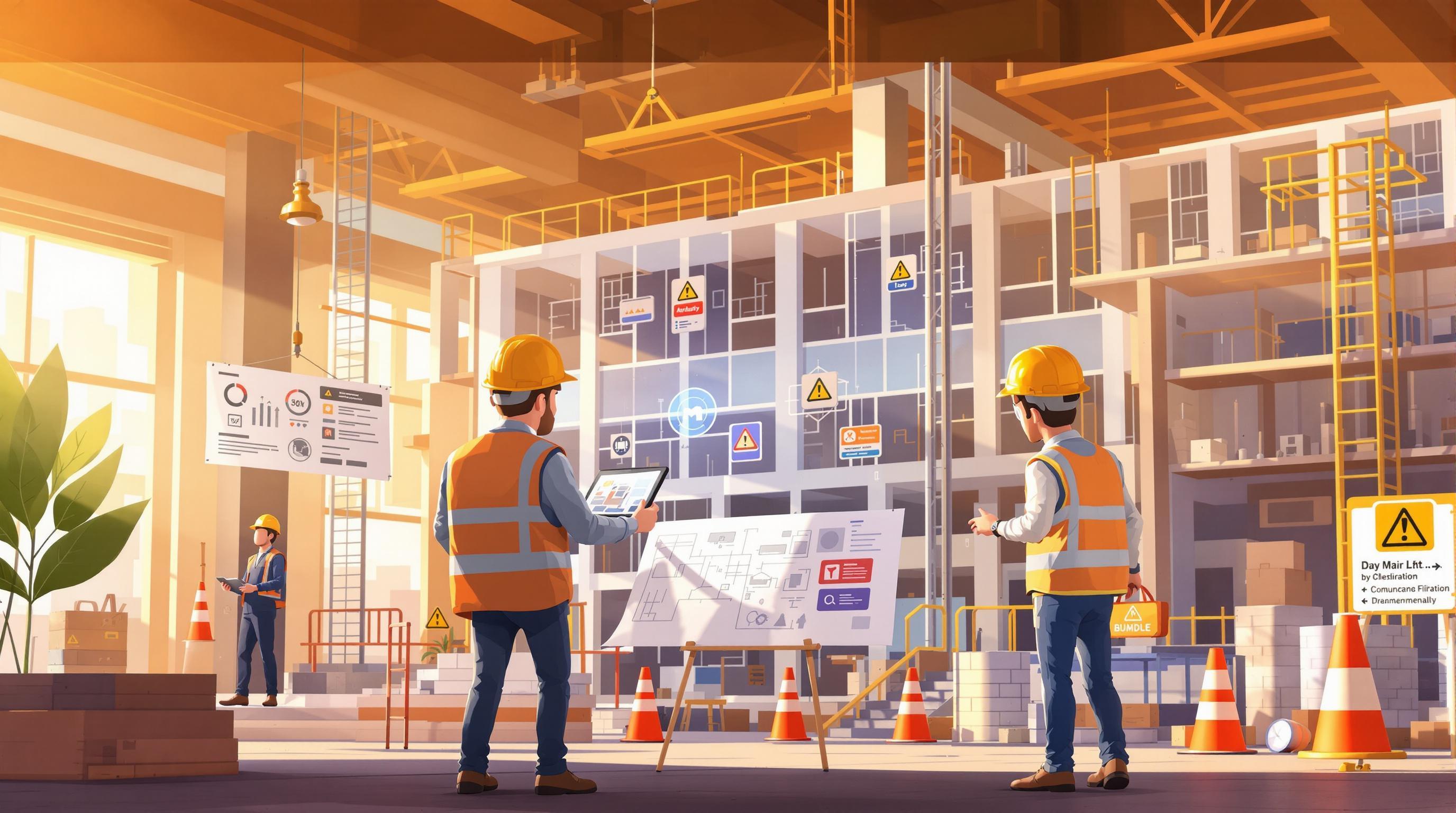
Incorporating compliance into AEC software from the start ensures your projects meet building codes, avoid fines, and improve safety. Here’s why it matters and how to do it:
- Avoid Costly Rework: Identify and integrate federal, state, and local building codes early.
- Automate Compliance Checks: Use tools like BIM and AI to validate designs and spot errors fast.
- Streamline Processes: Replace paper-based systems with digital tools to save time and improve accuracy.
- Stay Current: Monitor and update for changing regulations to keep projects compliant.
Key Benefits:
- Save Time: Automate compliance tasks and reduce manual work.
- Lower Risks: Minimize legal exposure and ensure safety standards.
- Scale Easily: Adapt to new codes and project demands without starting from scratch.
By embedding compliance into your software’s core, you can deliver safer, more reliable solutions while cutting costs and boosting efficiency. Ready to learn how? Let’s dive in.
"Towards automated building compliance" - A Regulatory …
Key Compliance Challenges in AEC Software
Understanding the main challenges in the Architecture, Engineering, and Construction (AEC) industry is crucial for creating effective software solutions. Below, we break down these challenges to help shape better strategies.
Multiple Building Codes and Standards
The variety of building codes and standards makes software development tricky. Programs need to include:
- IBC, NEC, and local, state, and industry-specific codes
Regional differences add another layer of complexity, requiring careful attention to ensure compliance across locations.
Keeping Up with Rule Changes
Frequent updates to codes and regulations mean developers must stay on top of changes. This involves updating software, archiving older versions for ongoing projects, and ensuring older projects remain compatible with new systems [1].
Problems with Paper-Based Systems
Paper-based processes slow down workflows and lead to costly inefficiencies:
- The construction industry loses around $177 billion annually due to overspending [3].
- Construction staff spend 35% of their time on non-project tasks, like searching for documents [3].
- A typical project generates over 50 change orders from design to completion [3].
Paper vs. Digital Benefits
Switching from paper to digital tools can solve many of these issues. Here’s how:
| Issue | Digital Solution |
|---|---|
| Document Loss | Centralized storage with backups |
| Version Control | Real-time updates and change tracking |
| Access Issues | Instant access from any device |
| Error Rates | Automated validation and compliance checks |
Later, we’ll dive into how digital tools can address these challenges effectively.
Adding Compliance Checks to Software Development
Identifying Regulations Early in Development
Spotting the necessary regulations early in the development process can help avoid expensive rework later on. To simplify this, set up a structured system for tracking regulations. Build a compliance matrix that includes federal, state, and local building codes, industry standards, safety protocols, and other relevant guidelines.
"UpCodes saves us a lot of time. And that’s not just time upfront, but time saved because we’re more accurate throughout the project lifecycle." [2]
Once you’ve identified the regulations, connect them directly to specific software features for smoother integration.
Linking Regulations to Software Features
After identifying the applicable rules, tie them to specific software features through careful planning and documentation. A centralized compliance database can help map these requirements, ensuring compliance is addressed at every phase of development:
| Development Stage | Compliance Integration |
|---|---|
| Planning | Map requirements |
| Design | Conduct regulation checks |
| Implementation | Apply validation rules |
| Testing | Verify compliance |
"UpCodes saves us a ton of time on the front end of the project - literally days of labor. The time we save in code research can be spent diving into other details of the project. This not only helps our team but helps our clients." [2]
Automating Compliance Checks
Automating compliance checks can speed up the development process and reduce mistakes. Use advanced tools like AI-powered validation, integrate BIM for real-time checks, and automate compliance reporting.
"UpCodes changed how I interact with the public. It’s so much easier to email a link to a code section or image of a diagram, which reduces confusion and saves me so much time." [2]
The benefits of automated compliance checks often include:
- Saving over 15 hours monthly per user
- Achieving a 1,200%+ return on investment
- Reducing compliance-related errors
"I have shown this to some of my inspectors and how it works. I will never be without this tool for the rest of my career." [2]
Tools for Better Compliance
Building on earlier strategies to integrate compliance during development, the tools below can improve the regulatory capabilities of your AEC software.
Using BIM for Compliance Checks
BIM simplifies compliance verification with accurate 3D analysis. These tools provide templates for geometric analysis, clash detection, and safety requirement checks.
The impact of BIM-based tools is massive. For example, Solibri‘s platform has helped users address over 2.5 billion compliance issues across 99 countries, with more than 14 million hours logged for compliance checks [5].
"With Automated Code Compliance Checking, not only a higher degree of compliance with the different regulations can be achieved, but also a significant reduction of effort is possible." - Cornelius Preidel & André Borrmann [4]
In addition to BIM, cloud systems and APIs simplify real-time updates and document management, making compliance processes more efficient.
Cloud Systems and API Integration
Cloud systems and APIs centralize compliance-related tasks and documentation:
| Feature | Compliance Benefit |
|---|---|
| Centralized Storage | Single, reliable source for documents |
| Real-time Updates | Instant updates for code changes |
| Automated Workflows | Easier compliance tracking |
| Self-service Portals | Simplifies subcontractor compliance tasks |
"UpCodes is one of the best things that has ever happened to the profession - hands down! If it wasn’t for innovators like you, we’d still be stuck in the dark ages. Thank you!" - Teri Coates, Owner at CANVAS Architecture [2]
These digital tools are complemented by strong data protection measures to safeguard compliance and sensitive project details.
Data Protection Requirements
Incorporating data protection into your AEC software is just as important as compliance checks. Key factors to consider include:
- Safety and Data Security
- Ensuring safety code adherence while protecting sensitive data
- Preserving property value through compliance measures
- Energy and Environmental Standards
- Tracking energy efficiency
- Managing ecological preservation goals
- Monitoring waste reduction efforts
This approach not only secures physical structures but also protects digital assets, supporting advancements in construction technology.
Compliance Tools and Methods
To ensure your AEC software meets regulatory standards, it’s crucial to use tools that integrate compliance checks early in the process. Effective management tools help track requirements and reduce risks, making compliance easier to handle.
Central Compliance Systems
Centralized platforms play a key role in managing regulations within AEC software. For example, Jama Connect‘s Live Traceability™ feature offers several advantages:
| Feature | Benefit |
|---|---|
| Real-time Scoring | Highlights risk areas in requirements and test verification automatically |
| Historical Context | Maintains complete audit trails for any changes in requirements |
| Reusable Catalogs | Minimizes design inconsistencies by using standardized requirement sets |
| Review Centers | Gathers feedback from all stakeholders in one place |
"Jama Connect is engineered to ensure quality with frameworks aligned to key industry standards which streamline design, development, testing, and risk management while maintaining compliance." [7]
Audit Trail Collection
Automated audit trail systems are another key component in compliance management. These systems significantly cut down assessment time by 80%, reduce compliance issues by 93%, improve efficiency by 70%, and save 16 hours per report [8]. With one-click reporting, they produce complete compliance documentation, eliminating manual tasks and improving accuracy.
Risk Detection Systems
Risk detection tools work alongside audit systems to flag potential regulatory problems early. For instance, UpCodes’ AI assistant, Copilot, simplifies risk detection, saving users over 15 hours per month and providing a strong return on investment.
"Copilot is fantastic! The answers are clear and understandable and the code citations are an added bonus. This has already saved me many hours of research just in the last couple of weeks." [2]
These tools are widely used in the industry, offering substantial time savings and improving communication with stakeholders.
Benefits of Built-in Compliance
Using compliance tools to embed regulatory measures into your processes can offer many advantages for development teams.
Lower Costs and Risks
Integrating compliance measures early in the process helps avoid expensive fixes, legal issues, and time-consuming documentation later on.
| Benefit | Impact |
|---|---|
| Reduce Rework | Identify and fix compliance issues early |
| Minimize Legal Risks | Avoid lawsuits, penalties, and regulatory fines |
| Save Time on Reports | Automate compliance reporting and documentation |
Improved Team Collaboration
Built-in compliance helps teams work together more effectively. Here’s how:
- Real-time Updates: Notifications keep everyone informed and accountable.
- Standardized Processes: Ensures consistent methods for handling compliance tasks.
- Streamlined Documentation: Simplifies the management of important compliance materials.
Specialized compliance tools can also enhance communication between team members, contractors, and compliance officers by offering features for task management and document control.
Scalability for Growth
Built-in compliance is designed to grow with your projects and adapt to new regulations [6]. Key benefits include:
- Flexible Frameworks: Easily adjust to meet new regulatory requirements.
- Expandable Systems: Handle increasing project demands without hassle.
- Automated Processes: Scale compliance efforts efficiently as your workload grows.
- Future-Ready: Stay prepared for evolving industry standards.
These features ensure your software is ready to handle both current and future challenges, setting the stage for long-term success.
Conclusion
Incorporating regulatory requirements from the beginning creates a strong foundation for AEC software. Companies adopting a compliance-by-design strategy often see notable time savings - teams report saving over 15 hours per month - and impressive returns, exceeding 1,200% [2]. These improvements are changing the way teams handle regulatory challenges.
Built-in compliance tools reshape how teams address regulations. They enhance safety measures, minimize legal risks, and encourage advancements in construction practices. As ProtoTech Solutions puts it:
"Compliance isn’t just a legal requirement; it’s a moral imperative and a testament to the professionalism of those in the industry." - ProtoTech Solutions [1]
With integrated compliance tools, teams can create scalable solutions that stay aligned with changing codes and standards. This forward-thinking approach improves safety, reduces legal exposure, and can even increase property value - all while cutting down on the time and costs associated with managing compliance.
In short, embedding compliance early on drives smarter growth and progress. The future of AEC software lies in solutions that prioritize compliance from the start, protecting stakeholders and encouraging innovation within the construction industry.