The Connected Jobsite: API Opportunities for AEC Startups
By Taher Pardawala · Co-Founder & Chief Executive Officer

Construction is embracing APIs to solve worker shortages and improve efficiency.
By 2024, the U.S. construction industry faced a 500,000-worker shortfall, while companies using six or more technologies were 30% more optimistic about future growth. APIs are the "digital mortar", connecting tools like Procore, QuickBooks, and IoT devices to streamline workflows, reduce errors, and improve safety.
Key Benefits of APIs for Construction:
- Automation: Real-time data sharing between systems eliminates manual entry.
- Site Monitoring: IoT sensors prevent accidents and track worker activity.
- Data Insights: Analytics tools turn raw data into actionable reports.
- Revenue Growth: Each new tech integration can add $580,000 annually for a $100M firm.
API Use Cases:
- Project Management: Sync budgets and payroll with tools like QuickBooks.
- IoT Integration: Wearables and sensors enhance safety and productivity.
- Analytics: Platforms like Procore Analytics provide instant project visibility.
Startups can fill market gaps by focusing on digital twins, AI analytics, and supply chain APIs. Prioritize security, scalability, and compliance when selecting APIs to drive innovation and efficiency on jobsites.
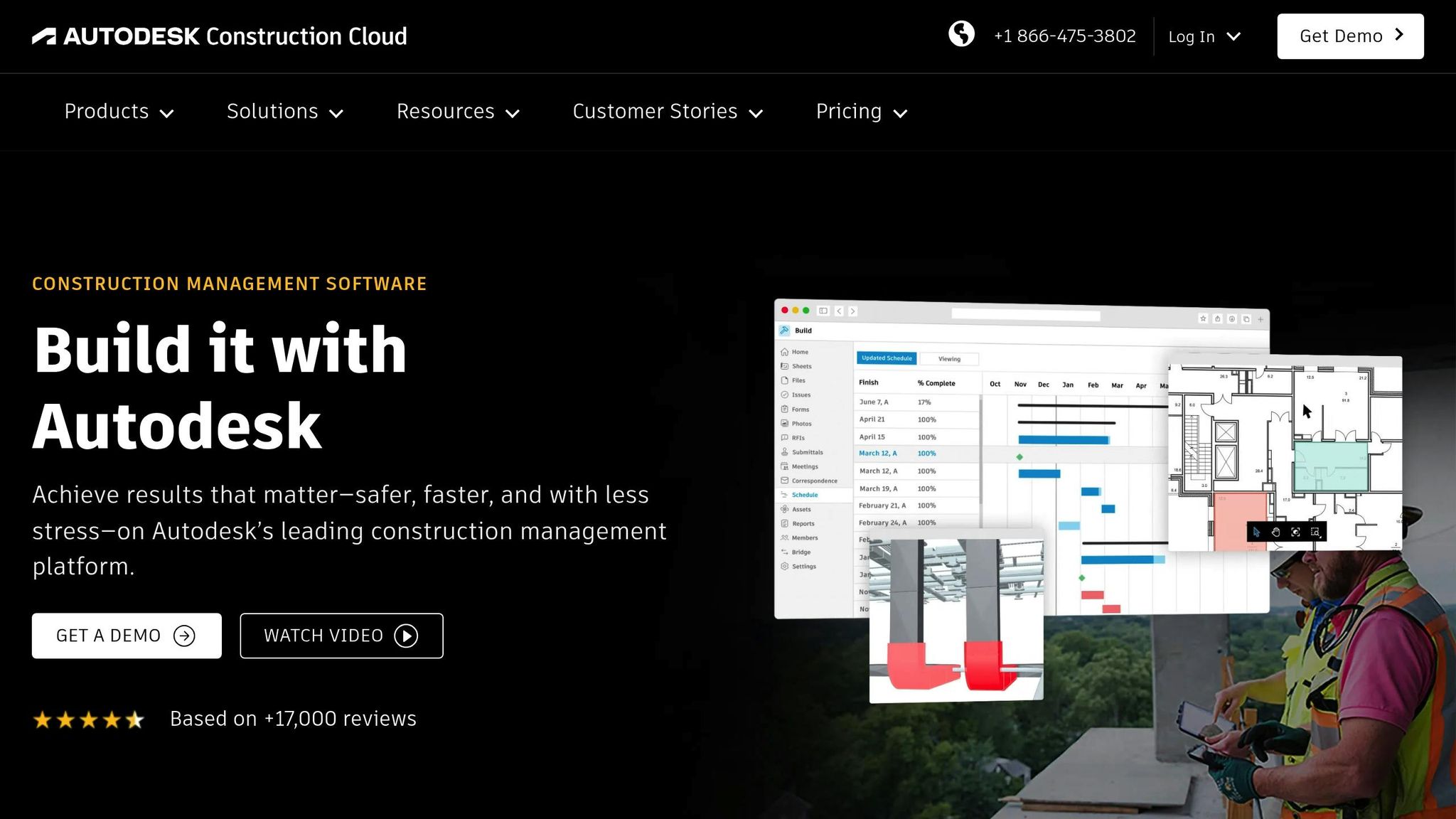
Connect to the Autodesk Construction Cloud API through …
APIs in AEC Projects
Startups looking to fill gaps in the market need a clear understanding of how APIs work and their various applications.
API Basics
APIs set the rules for exchanging data between systems. In AEC projects, they connect tools like project management, accounting, and field systems. This streamlines workflows and reduces manual errors, saving time and resources [1].
Common AEC API Categories
APIs in the AEC industry serve different purposes, including:
- Financial Integration: Sync accounting systems with project cost data (e.g., QuickBooks API).
- Document Management: Handle plan updates and version control directly from cloud platforms.
- Data Analytics: Export takeoff data into tools like Excel for customized reporting.
- Weather Integration: Incorporate live weather data into daily site logs.
- Procurement: Automate material orders and access discounts through APIs like Home Depot API [2].
API System Integration Methods
Here’s how APIs connect systems in AEC workflows:
- Direct Integrations: These link platforms with accounting tools, enabling seamless syncing of invoices and expenses (e.g., Buildertrend-QuickBooks) [2].
- Field and Estimating Tools: APIs connect these tools to provide real-time updates on budgets and costs (e.g., TopBuilder) [1].
- Open APIs: These allow data sharing across multiple platforms, fostering a connected tech ecosystem (e.g., STACK with Dodge Data & Analytics) [1].
Next, we’ll explore how these API strategies enhance site operations and improve efficiency.
Main API Uses on Construction Sites
Construction sites rely heavily on three key API-powered areas: project management, IoT monitoring, and analytics. These applications simplify operations, improve safety, and help teams make smarter, data-driven decisions.
Streamlining Project Management
Buildertrend’s API integrates project budgets with tools like QuickBooks, Xero, and Gusto. This eliminates the need for manual data entry, reduces errors, and automates payroll processes. It’s a game-changer for keeping projects on track and teams aligned.
Improving Site Monitoring
IoT devices connected via APIs are transforming how construction sites manage safety and monitoring. Wearables such as proximity sensors, movement trackers, condition sensors, and even exoskeleton suits provide real-time alerts. These tools help prevent accidents, track worker activity, and monitor environmental conditions.
This technology addresses a critical issue: while construction workers make up only 6% of the U.S. workforce, they account for about 20% of workplace fatalities each year [3]. API-enabled IoT systems deliver instant alerts, allowing teams to identify hazards and respond immediately.
Unlocking Actionable Data
APIs also play a crucial role in construction analytics, turning raw data into meaningful insights. For example, Harkins Builders uses Procore Analytics to give everyone - from field superintendents to the CEO - real-time visibility into project and company performance [4].
Construction analytics platforms offer features like:
- Real-time integration: Combine live data for instant insights
- Custom dashboards: Access more than 100 prebuilt construction reports [4]
- Automated reporting: Save time by eliminating manual report generation
- Financial forecasting: Protect project margins with forward-looking analysis
These API-driven tools are the foundation of today’s connected, efficient jobsites.
API Selection Guide for AEC Startups
Once you’ve outlined your core API applications, the next step is picking the right endpoints. For startups focusing on project management, IoT, and analytics, consider these key factors when evaluating APIs:
- Integration compatibility: Ensure support for platforms like Autodesk and CMiC to enable smooth data exchange.
- Security standards: Look for OAuth/OpenID Connect and HTTPS encryption to protect your data.
- Industry compliance: Check for adherence to GDPR, SOC 2 Type II, and ISO 27001 standards.
- Scalability: Confirm the API can handle multiple projects and large volumes of data.
To implement APIs effectively, follow a structured integration process that aligns with the direct, field, and open integration patterns mentioned earlier:
- Assess existing systems: Identify integration points and define the necessary data flows.
- Test in a sandbox: Validate the API’s functionality and ensure data accuracy.
- Pilot and roll out: Start with one site, address any issues, and then expand.
Data Security Requirements
Authentication & Access Control
- Use role-based permissions to limit access.
- Manage keys securely - avoid hardcoding, use vaults, and rotate tokens regularly.
"Agave captured Brinkman’s requirements and built an integration we can rely on. As project complexity increases, we needed an integration to ensure Autodesk and CMiC provide accurate data to our project teams. This integration does exactly that." - Tim Kelleher, Operational Standards [5]
Monitoring & Error Handling
- Log and audit API calls to detect anomalies.
- Implement error-handling measures to prevent data leaks.
Up next, see how these decisions can drive meaningful advancements in construction innovation.
API Solutions for Construction Innovation
Connecting design and execution, APIs are driving measurable results in the construction industry. AlterSquare is at the forefront of making this happen.
Once the right APIs are chosen and secured, startups can tap into new opportunities for growth and efficiency.
How APIs Benefit AEC Startups
APIs bring three major advantages to Architecture, Engineering, and Construction (AEC) startups:
- Better Data Accuracy: Automating data sync between project management and accounting tools ensures financial records are precise and up-to-date.
- Time Savings: Teams can skip manual data entry, freeing up hours for more critical tasks.
- Improved Coordination: Sharing real-time data between on-site teams and office systems keeps everyone on the same page.
To maximize these benefits, many teams collaborate with specialists who can fast-track API implementation.
AlterSquare‘s API Development Services
AlterSquare specializes in creating custom APIs that connect various construction systems. Their 90-day MVP framework helps validate integrations and supports future scaling.
Their core services include:
- Developing and prototyping APIs within a 90-day MVP timeline
- Offering expert guidance on API architecture and security
- Providing ongoing maintenance and performance tuning
Real-World API Success Stories
Companies like EllisDon and Webcor have successfully used APIs to streamline their operations. For example, they leveraged Fieldwire to improve plan management and communication on projects worth $800M and $500M, respectively. This led to reduced staffing needs and less rework.
"Fieldwire is great because you can capture and control all your data all in one spot. I bet you it has probably saved us 2-3 QA/QC people on our project, in all honesty." - Mike Armstrong, Assistant PM at EllisDon [6]
Conclusion
Key Takeaways for AEC Startups
APIs streamline the exchange of data across project management tools, IoT systems, and analytics platforms. This improves efficiency, accuracy, and coordination while supporting growth for AEC startups.
AlterSquare Construction Solutions
- Develop an API MVP in just 90 days
- Build scalable and secure integration frameworks
- Access ongoing support and performance optimization
Reach out to AlterSquare to drive innovation on your jobsites with API-powered solutions.