How to Prioritize Features in Construction Management Software
By Taher Pardawala · Co-Founder & Chief Executive Officer
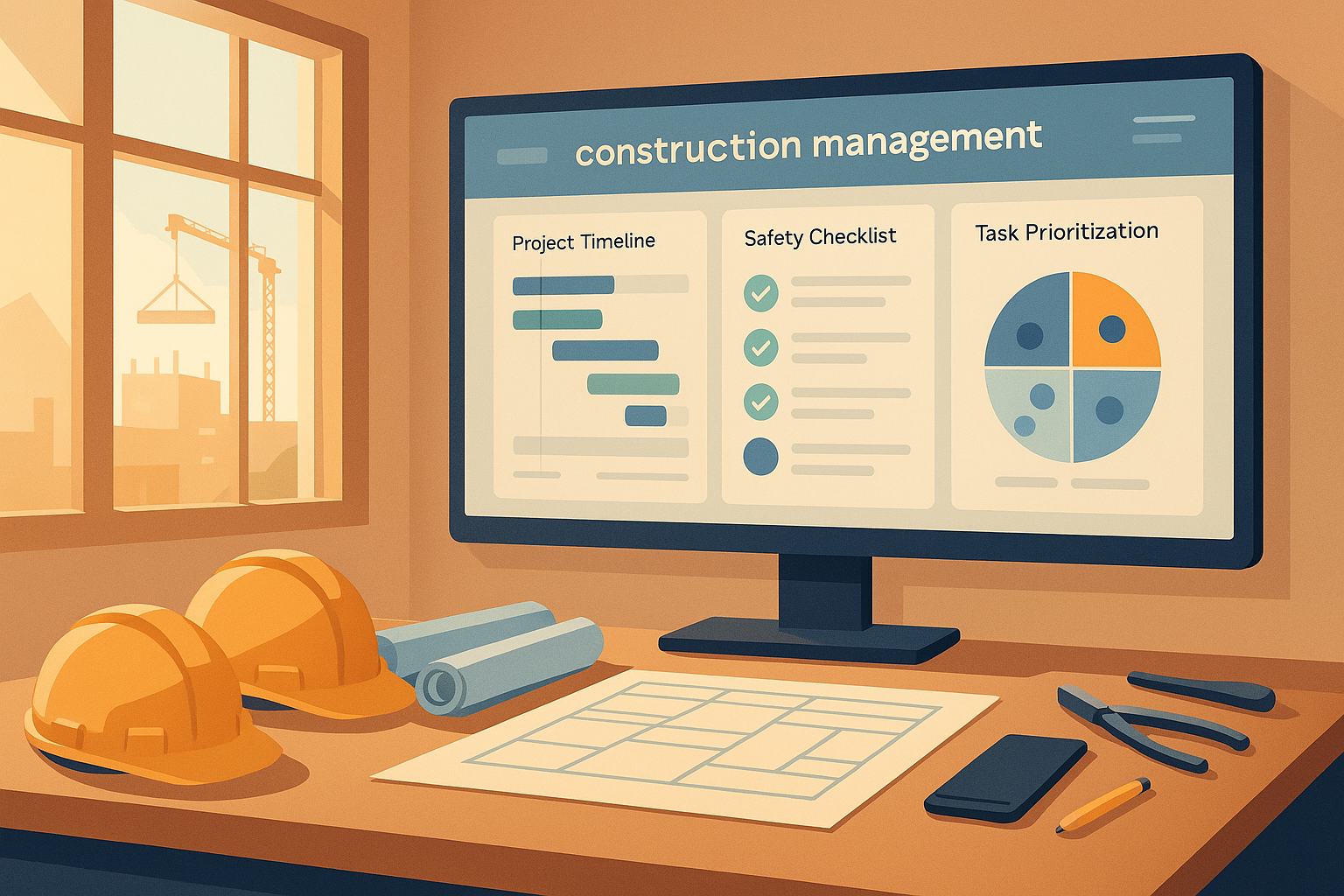
Only 25% of construction projects finish within 10% of their planned deadlines, and 98% of mega projects face delays or budget overruns. These numbers highlight why prioritizing features in construction management software is critical. The goal? Solve the most pressing industry challenges like delays, resource mismanagement, and safety concerns.
Here’s how to prioritize features effectively:
- Focus on Key Problems: Address delays, labor shortages, safety risks, and financial losses first.
- Use Customer Feedback: Conduct interviews, surveys, and beta tests with construction professionals.
- Rank Features: Apply frameworks like RICE (Reach, Impact, Confidence, Effort) or MoSCoW (Must, Should, Could, Won’t) to score features.
- Plan Smart Rollouts: Start with core features like safety compliance tracking and resource allocation, then expand to advanced tools like AI scheduling.
Quick Tip: Features that save time, reduce costs, and improve safety should always take priority. Use structured methods to balance technical feasibility with user needs.
Top Tips for Choosing and Implementing Construction …
Mapping Construction Industry Needs
To create software that truly helps the construction industry, it’s essential to understand key workflows and pinpoint the biggest challenges.
Common Construction Workflows
Construction projects follow a set of structured processes that require efficient software support. Some of the core workflows include preconstruction planning, resource allocation, and project execution monitoring [2]. Each of these areas comes with its own challenges. For example, resource management tools need to handle both routine tasks, like equipment maintenance, and sudden disruptions, such as machinery breakdowns, while ensuring the project stays on schedule.
By mapping these workflows, developers can identify where technology can reduce inefficiencies and improve operations.
Main Problem Areas
Now let’s dive into the most pressing issues that construction software needs to solve. According to McKinsey, over 30% of large construction projects go over budget, and 77% experience delays of at least 40% [3]. These statistics point to critical areas where better tools can make a difference.
- Labor Management Issues: The National Center for Construction Education and Research warns that 41% of the current construction workforce is expected to retire by 2031 [3]. This creates a pressing need for software that simplifies training and increases worker productivity.
- Communication Gaps: Poor communication between teams often leads to costly delays. Software should centralize document management and create clear communication channels for all stakeholders.
- Safety Concerns: In 2021, construction accounted for 21% of all workplace fatalities, making it the most dangerous industry [3]. Safety management tools that track compliance and reduce risks are essential.
- Financial Oversight: Construction companies lose about $1 million every 10 seconds due to poor planning [3]. Tools with advanced forecasting and automated cost tracking can help prevent these losses.
To tackle these challenges, software needs to focus on these core issues while remaining adaptable to specific project needs. For example, AI-powered tools can improve scheduling and boost efficiency by allowing contractors to adjust plans in real time [1].
Using Customer Input to Select Features
Getting User Feedback
Once the main challenges are clear, it’s essential to gather direct feedback from construction professionals. Focus on issues like tool loss and skilled labor shortages to pinpoint features that provide immediate value.
Here are some effective ways to gather feedback:
- In-depth Interviews: Speak directly with project managers and compliance officers to learn about their specific workflow challenges. These one-on-one conversations can reveal details that broader surveys might miss.
- Targeted Surveys: Create surveys that address specific aspects of construction management. For example, when AlignOps surveyed contractors, they found that nearly 50% of respondents identified tool loss as their biggest concern, and 61% saw skilled worker shortages as a major future challenge [4].
- Beta Testing Programs: Allow a select group of construction professionals to test early versions of features. This approach helps validate ideas before full-scale implementation.
Once feedback is collected, organize and quantify the insights to prioritize features that will have the most impact.
Measuring Feedback Results
Analyzing the feedback systematically is key to turning it into actionable insights. Group the feedback into key focus areas:
| Impact Area | Priority Indicators | Common Issues |
|---|---|---|
| Operations | Time savings, error reduction | Tool tracking, resource allocation |
| Compliance | Risk mitigation, safety improvements | Safety protocols, certification tracking |
| Financial | Cost reduction, ROI | Budget tracking, cost forecasting |
| Communication | Information flow, team coordination | Document sharing, real-time updates |
Quantify User Needs: Identify how often specific features are requested and their potential impact. For instance, two-thirds of construction businesses transitioning to digital time tracking [4] highlights strong demand for automated time management tools.
"Tool loss is only the symptom of greater organizational inefficiencies like poor asset management, maintenance, and allocation." - AlignOps [4]
Evaluate feedback using these criteria:
- Severity: How critical is the issue to daily operations?
- Frequency: How often does the problem come up?
- Scope: How many users or projects are affected?
- Implementation: How realistic is the solution given current technical constraints?
Frameworks like RICE (Reach, Impact, Confidence, Effort) can help score feature requests. This ensures development focuses on features that deliver the most value while staying within technical limits.
Feature Ranking Methods
Once you’ve collected user feedback, the next step is to organize and rank features using structured methods.
Common Ranking Systems
Using prioritization frameworks can help allocate resources more effectively. One popular method is RICE, which evaluates features based on Reach, Impact, Confidence, and Effort:
| RICE Component | Application in Construction | Example Metric |
|---|---|---|
| Reach | Number of projects affected | 200 active construction sites |
| Impact | Efficiency improvement | 30% reduction in scheduling delays |
| Confidence | Implementation certainty | 80% based on beta testing |
| Effort | Development resources | 12 developer weeks |
This framework helps align technical feasibility with the unique challenges of construction projects.
For early-stage development, the MoSCoW method is particularly useful for defining a construction-focused MVP:
- Must have: Safety compliance tracking, permit management
- Should have: Resource allocation tools, progress tracking
- Could have: Advanced reporting features, custom dashboards
- Won’t have: Features planned for future releases
Construction-Specific Rankings
To meet the demands of the construction industry, you can tailor ranking methods further. The Value vs. Complexity matrix is a helpful tool for balancing technical constraints with construction-specific needs:
| Value Level | High Complexity | Low Complexity |
|---|---|---|
| High Value | OSHA compliance tools | Daily progress tracking |
| Medium Value | BIM integration | Material inventory |
| Low Value | Advanced analytics | Basic notification system |
When prioritizing features for construction projects, consider these key factors:
- Regulatory Deadlines: Focus on features that support compliance with upcoming U.S. building codes.
- Safety Requirements: Rank safety-related features based on OSHA standards.
- Cost Impact: Assess features based on their potential for cost savings, measured in USD.
- Risk Mitigation: Prioritize features that reduce liability and enhance safety documentation.
The Walking Skeleton approach can be particularly effective for delivering core functionality - like permit tracking and safety compliance - early in the development process. For more advanced products, combining RICE with industry-specific metrics ensures better alignment with construction priorities.
5 Steps to Pick MVP Features
Here’s how to narrow down and select the best features for your Minimum Viable Product (MVP). These steps build on feedback and ranking techniques to simplify the decision-making process.
Set Goals and List Features
Start by aligning potential features with your business goals and essential workflows like permit management, safety compliance, or resource tracking. Focus on features that directly support key construction processes.
Use a simple Feature Priority Matrix to evaluate each feature:
| Priority Level | Impact | Complexity | Example Features |
|---|---|---|---|
| Critical | High ROI, meets regulations | Medium | OSHA safety tracking |
| Important | Improves workflows | Low | Daily progress reports |
| Nice-to-have | Improves user experience | High | Custom dashboards |
Focus on features that solve pressing problems. Once identified, assess these features using measurable metrics.
Rank and Check Priorities
Evaluate each feature using a Relative Weighting method across four key areas:
- Business Value
- How much it reduces costs
- Time saved in compliance processes
- Its role in reducing risks
- User Impact
- How many users it affects daily
- How often the feature will be used
- The severity of the problem it addresses
- Implementation Effort
- Time needed for development
- Technical challenges involved
- Potential integration issues
- Risk Assessment
- Regulatory compliance needs
- Safety-related impacts
- Data security concerns
This scoring system helps you identify which features should take priority for your MVP.
Plan Feature Releases
Organize your feature rollouts to align with industry patterns and deadlines. Start with core features and gradually add more complex ones in later phases.
When planning, consider:
- Seasonal Construction Patterns: Launch major updates during slower seasons.
- Regulatory Deadlines: Time releases to coincide with OSHA updates or other compliance requirements.
- User Feedback Loops: Build in time for collecting and acting on user feedback.
Set clear benchmarks for success at every stage. Track metrics like:
- Time saved on compliance documentation
- Reduction in delays for safety incident reporting
- Better efficiency in resource allocation
- Adoption rates across different user roles
Conclusion: Making Smart Feature Choices
To create construction software that aligns with user needs and regulatory requirements, prioritizing features based on data is key. Frameworks like RICE and PRISM help development teams strike a balance between business objectives and technical constraints.
Efficient use of resources is essential. By focusing on the most impactful features, teams can save time and direct their efforts toward functionalities that truly contribute to project success.
Here’s a quick look at the frameworks discussed earlier, and how they can guide feature prioritization:
| Framework | Best Use Case | Primary Focus |
|---|---|---|
| RICE | Managing large feature sets | Reach, impact, confidence, effort |
| PRISM | Evaluating risks | Value, strategic alignment |
| ICE | Fast decision-making | Impact, confidence, ease |
Feature prioritization is an ongoing process. As the construction industry evolves and regulations shift, your strategy should adjust to meet current demands while preparing for future growth. Applying these principles consistently during development cycles ensures your software remains relevant and effective.
FAQs
How can construction management software help address labor shortages caused by workforce retirement?
Construction management software can play a crucial role in mitigating labor shortages by focusing on worker retention, training, and safety enhancements. By integrating tools that streamline workflows, reduce manual tasks, and improve communication, the software can create a more efficient and less stressful work environment, which helps retain employees longer.
Additionally, advanced features like real-time data tracking can support training initiatives, enabling workers to upskill quickly and adapt to modern construction practices. Enhanced safety measures, such as automated compliance checks and risk monitoring, can also protect workers and reduce accidents, making job sites more appealing to both new and experienced employees.
By leveraging these capabilities, construction management software ensures projects run smoothly despite workforce challenges, while also fostering a safer and more sustainable work environment.
What key features in construction management software help improve communication and team collaboration?
Effective communication and collaboration in construction management software can be achieved through real-time communication tools, automated task management systems, and issue tracking features. These tools ensure that team members stay connected, tasks are clearly assigned, and any problems are promptly addressed.
For example, real-time communication tools enable instant updates and discussions, while automated task management ensures everyone knows their responsibilities and deadlines. Issue tracking helps teams identify and resolve problems quickly, preventing delays and keeping projects on schedule.
How can the RICE framework help prioritize features in construction management software, and what are some examples of key metrics?
The RICE framework is a powerful tool for prioritizing features by evaluating four key factors: Reach, Impact, Confidence, and Effort. It helps teams focus on features that deliver the most value with the least effort.
In construction management software, Reach could refer to the number of users or projects a feature will benefit in a month. Impact measures how much a feature improves workflows or solves pain points, often rated on a scale (e.g., 1 to 5). Confidence assesses how certain you are about your estimates for reach, impact, and effort, expressed as a percentage. Finally, Effort estimates the time and resources required to develop the feature, typically measured in person-weeks or months.
By calculating a RICE score for each feature, teams can prioritize those that maximize user value while aligning with business goals and resource constraints.
Related Blog Posts
- Why Construction Software Feels Stuck in the 90s: UI/UX Challenges in Industrial Applications
- Why Construction Tech UX Is Different: Designing for Jobsite Realities
- Building for Builders: User Research Strategies for Construction Tech Startups
- From Blueprint to Product: Validating Your AEC Software Concept