Self-Hosted AI for Construction Firms: Architecture, Costs, and Compliance in 2025
By Taher Pardawala · Co-Founder & Chief Executive Officer
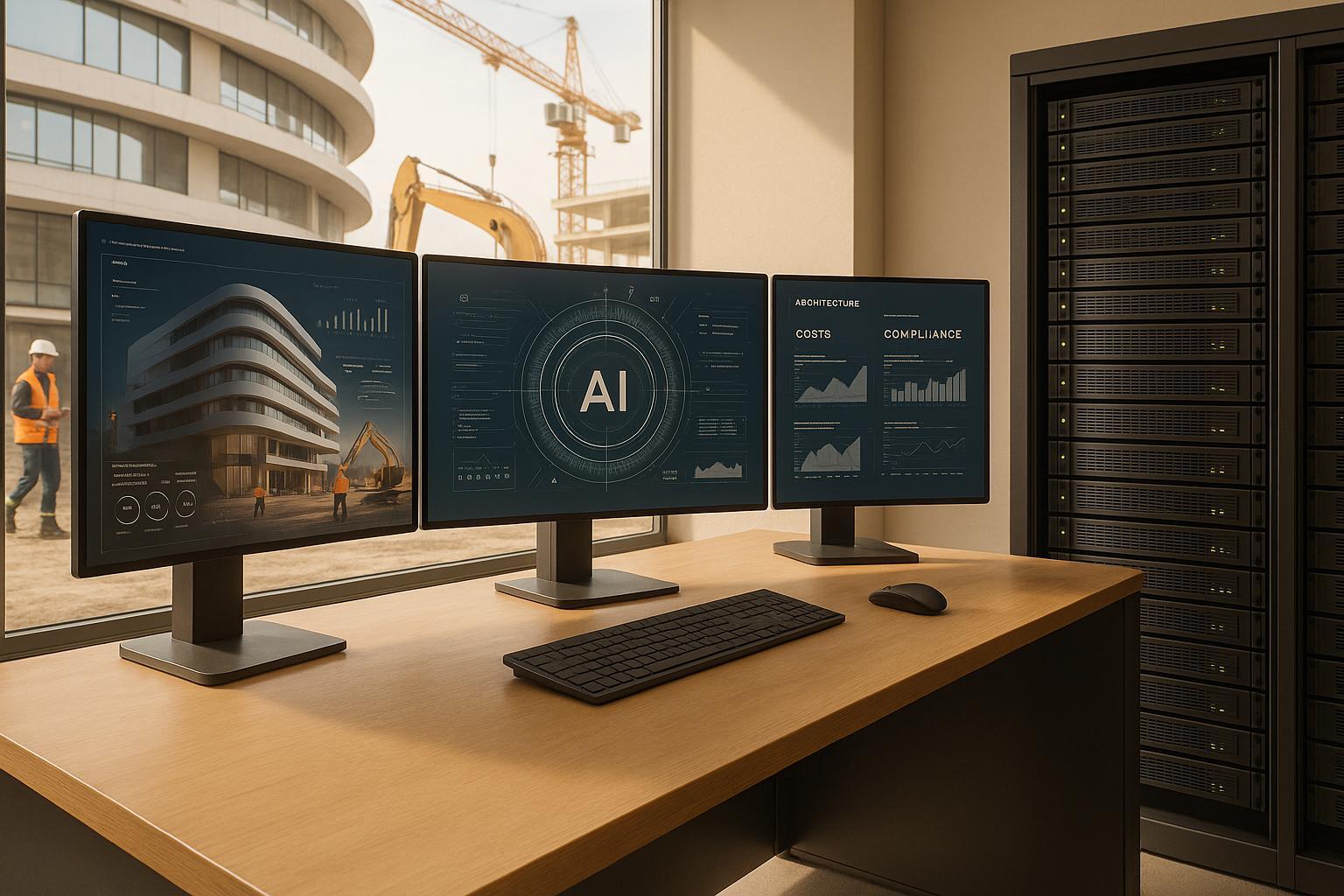
Why are construction firms in 2025 moving to self-hosted AI? It’s simple: they want full control over sensitive data, avoid relying on unpredictable third-party vendors, cut long-term costs, and meet strict compliance standards. The shift ensures data security, operational flexibility, and better cost predictability.
Here’s the breakdown of what’s involved:
- System Setup: A self-hosted AI system requires three key components - AI models (e.g., Llama 2), a vector database for fast data retrieval, and an API layer for seamless integration with existing tools like BIM, ERP, and project management software.
- Costs: Initial setup ranges from $50,000 to $500,000+, with GPUs like NVIDIA A100 priced at $25,000-$40,000 each. Ongoing costs include electricity (up to six figures annually), IT staffing ($100,000-$200,000/year), and maintenance.
- Compliance: Firms must follow regulations like GDPR, CCPA, and industry standards such as OSHA and ISO 19650. Data encryption, audit logs, and detailed documentation are essential for meeting these requirements.
- Implementation: Start small with a pilot project, scale gradually, and decide between custom AI development or using existing tools. Building the right team, including AI engineers and construction tech specialists, is critical for success.
Self-hosted AI offers construction firms more control, security, and scalability. While the upfront investment is significant, improved efficiency in planning and cost estimation can deliver ROI within 18-36 months.
CNL: From Idea to Implementation - How to Self-Host an AI Agent
Architecture Requirements for Self-Hosted AI Systems
A well-designed architecture is essential for managing large project files, enabling real-time collaboration, and ensuring smooth AI integration that scales with your firm’s needs.
Core System Components
The system is built around three key components: an AI model layer, a vector database, and an API layer. Together, they create a foundation for efficient data processing and secure communication.
- AI Model Layer: This includes tools like Large Language Models (LLMs) for text processing and multimodal models for handling both text and images. For example, Llama 2 can manage tasks like contract analysis or blueprint reviews, while multimodal models can analyze construction photos and architectural drawings simultaneously.
- Vector Database: This component ensures fast data retrieval from vast datasets, such as project specs, historical costs, vendor details, and compliance requirements. Tools like Chroma and Weaviate convert this data into numerical formats, enabling quick searches across your firm’s archives.
- API Layer: This layer facilitates secure communication between components. It handles requests from construction software, manages user authentication, and ensures seamless data flow. A flexible API design allows for component updates without disrupting the entire system.
For hardware, requirements depend on your firm’s size and usage. A mid-sized firm might need servers with 64GB RAM, modern GPUs, and 2-5TB of initial storage, with room for future expansion.
These components integrate smoothly with your existing construction software, as outlined in the next section.
Connecting AI with Construction Software
Once the architecture is in place, connecting it to construction software unlocks new possibilities. Integration with BIM, project management, and ERP systems ensures real-time data flow, improving planning and predictive analytics.
- Building Information Modeling (BIM) Platforms: Tools like Autodesk Revit can connect via APIs, allowing AI to detect design conflicts, suggest material improvements, and flag potential construction issues - all through automated data synchronization.
- Project Management Systems: Platforms such as Procore and PlanGrid enable predictive insights, helping identify budget overruns, forecast delays, and optimize resource allocation using real-time data.
- Enterprise Resource Planning (ERP) Software: ERP integration supports cost analysis, vendor performance tracking, and supply chain management. By analyzing historical purchasing data, AI can assist in negotiating better contracts and predicting material prices.
Real-time synchronization ensures updates in one system instantly reflect across connected tools. To maintain reliability, robust error-handling measures are crucial to prevent synchronization failures.
Security and Data Protection Setup
Protecting sensitive data while maintaining system efficiency requires a multi-layered security approach.
- Network Segmentation: Isolate the AI system within its own network segment using VLANs or dedicated hardware. This ensures that even if another part of the network is compromised, AI data remains secure.
- Access Control: Implement role-based permissions. For example, project managers might have full access to project data, while field supervisors only access site-specific information. Integrating Single Sign-On (SSO) with existing directory services simplifies user management.
- Data Encryption: Use AES-256 encryption for stored data and TLS for network communications. Regularly rotate encryption keys to maintain security.
- Audit Logging: Keep detailed logs of user actions, data access, and system changes. Retain these logs for 3-7 years, depending on compliance requirements, to monitor security and meet regulatory standards.
- Backup and Disaster Recovery: Schedule automated daily backups with local and off-site storage. Regularly test recovery procedures to ensure they work as intended.
Complete Cost Analysis for Self-Hosted AI Implementation
Setting up a self-hosted AI system involves substantial upfront hardware costs, ongoing operational expenses, and the potential for measurable returns on investment (ROI).
Hardware and Infrastructure Expenses
Unlike cloud-based platforms that follow a subscription model, self-hosted AI demands a large upfront capital investment. Depending on your organization’s size and AI needs, initial setup costs can range from $50,000 to over $500,000 [1].
A significant portion of this expense comes from GPUs, which are critical for tasks like blueprint analysis and project optimization in construction AI. For example, NVIDIA A100 GPUs are priced between $25,000 and $40,000 each, while the H100 models are even more expensive [2]. Operating a single GPU server with an A100 or H100 costs around $1.15 to $2.24 per hour [1]. If your system requires multiple GPUs, costs can easily climb into the millions [2].
Processors and memory systems also add to the bill. Entry-level systems (7-13B parameters) cost about $1,000 to $2,000, mid-range systems (13-30B parameters) range from $2,500 to $4,500, and high-end setups (70B+ parameters) can exceed $6,000 [3].
Storage and networking are additional considerations. Enterprise storage arrays cost approximately $150 to $300 per terabyte [1], and you’ll need reliable networking equipment, cooling systems, and power supplies to ensure smooth operation and protect your hardware investment.
While these setup costs are substantial, ongoing operational expenses play a key role in determining the system’s total cost of ownership.
Ongoing Operations and Maintenance Costs
After the initial setup, recurring expenses become the primary financial consideration. Electricity and cooling are among the largest ongoing costs. In the U.S., electricity rates average between $0.36 and $0.71 per kWh [1]. For context, an 8× H100 server can consume more than 3kW, resulting in annual electricity bills that can reach six figures [2].
Staffing and maintenance also contribute significantly. Dedicated IT support for tasks like downtime management and hardware replacement can cost between $100,000 and $200,000 per year [1]. Additionally, it’s prudent to allocate an extra 10% to 15% annually for repairs and upgrades [2]. Other recurring costs include software licensing for AI frameworks, database management tools, and security systems, as well as periodic model training.
Return on Investment
Despite the high costs, the ROI for self-hosted AI systems can be compelling. Efficiency gains often offset the investment. For example, many construction firms report 15% to 30% reductions in project planning time and 10% to 20% improvements in cost estimation accuracy after adopting AI solutions. These improvements can help mid-sized firms recover their investment within 18 to 36 months.
Meeting Compliance and Legal Requirements
Construction firms adopting self-hosted AI systems must navigate a maze of regulations, including data privacy laws, industry standards, and documentation protocols. While self-hosted AI offers full control over data, it also comes with greater compliance responsibilities. Incorporating robust compliance measures is crucial for ensuring a secure and effective AI framework.
Data Privacy and Storage Regulations
Data privacy laws like the CCPA and GDPR set strict requirements for protecting personal information. The CCPA ensures that California residents’ data is safeguarded, while the GDPR mandates explicit consent for data usage and requires quick breach notifications for EU residents’ information. For projects involving sensitive sectors, like healthcare, firms must implement strong encryption and data protection measures.
State-specific regulations add another layer of complexity. For instance, Illinois’s Biometric Information Privacy Act (BIPA) directly affects firms using AI-driven biometric tools, with violations leading to hefty penalties. To stay compliant, firms must align internal security protocols with these laws, ensuring data handling practices meet all obligations.
Construction Industry Standards
The construction industry operates under stringent standards that influence how AI systems are designed and managed. For example, BuildingSMART International‘s Industry Foundation Classes (IFC) standards dictate how Building Information Modeling (BIM) data should be structured and shared. AI systems handling BIM data must comply with these standards to ensure compatibility and meet project expectations.
Occupational Safety and Health Administration (OSHA) regulations also play a role. AI tools analyzing safety data or predicting workplace risks must support accurate recordkeeping to aid regulatory inspections. Additionally, international benchmarks like ISO 19650 guide the management of digital information across a project’s lifecycle, particularly for BIM-related activities.
Professional licensing adds another layer of oversight. Many states require licensed architects or engineers to review and approve AI-generated designs or analyses. Self-hosted AI systems must integrate workflows to ensure this professional oversight. For federal projects, compliance with the Davis-Bacon Act is essential, requiring AI systems managing payroll or workforce data to maintain detailed records for wage compliance and worker classifications. These requirements highlight the need for precise documentation and audit-ready systems.
Documentation and Audit Requirements
Clear and thorough documentation is critical for proving compliance. Self-hosted AI systems should generate detailed audit trails that track data access, model training activities, and decision-making processes. These records are indispensable for regulatory audits, client evaluations, and internal checks.
Keeping track of AI model governance is equally important. Firms need to document model versions, training data sources, and performance metrics - especially for systems influencing key decisions like structural integrity or safety evaluations. Data lineage tracking should also be in place to trace information from its origin through every stage of processing.
When updating AI models or configurations, change management documentation becomes vital. Firms must record what changes were made, when they occurred, who approved them, and how updates were tested to ensure they don’t compromise safety or quality. Retention policies should align with industry standards and legal requirements, ensuring records are kept for the mandated duration.
Regular internal compliance reviews are essential for identifying and addressing potential issues before they become violations. Routine audits of access logs, data handling practices, and documentation processes allow firms to adapt their compliance strategies as regulations evolve, ensuring they remain ahead of potential risks.
Step-by-Step Implementation Guide
Rolling out self-hosted AI in construction requires a careful, systematic approach to minimize risks and ensure success. The complexity of construction projects means diving headfirst into full-scale AI deployment can lead to costly errors and disruptions. Following a structured implementation process is key to creating AI systems that are secure, scalable, and aligned with both regulatory and operational demands.
Gradual Rollout and Testing Approach
Start small. Begin with a pilot project that runs over 90-120 days. Set clear goals, track performance metrics, gather user feedback, and document how the system behaves. Once you’ve gained insights and resolved initial challenges, scale up by running AI across 2-3 projects at the same time. This step helps test scalability and identify any resource or process bottlenecks.
During this phase, focus on collecting critical data like response times and user adoption rates. This information will guide decisions about further scaling. As you expand, pay attention to how resources are utilized, whether data processing is efficient, and what level of support is required to maintain smooth operations.
The next step is rolling out AI across an entire department or business unit. For example, you might implement AI-driven project scheduling for all active construction sites or use predictive analytics to manage equipment maintenance across the board. At this stage, the emphasis shifts from proving the technology works to fine-tuning workflows and improving operational efficiency.
Full organizational deployment comes only after these earlier phases are complete. By this point, your team will have the expertise to manage the system effectively and processes will have been refined through real-world application.
With your rollout plan in place, the next major decision is how to develop or source the AI solution that best fits your company’s needs.
Choosing Between Custom Development and Existing Solutions
The choice between building a custom AI solution and using existing tools depends on your company’s specific requirements, technical expertise, and project timelines. Custom solutions are ideal for highly specialized needs, but they require significant time and resources - typically 12-18 months. On the other hand, existing tools can often be deployed in just 3-6 months, making them a faster option for firms needing immediate results.
Open-source tools like TensorFlow and PyTorch offer a flexible middle ground. These frameworks provide a solid foundation that can be tailored to meet construction-specific needs without starting from scratch. While this approach requires strong technical skills within your team, it offers more control than commercial solutions and avoids the high costs of custom development.
For many construction firms, hybrid approaches strike the right balance. For instance, you could use pre-existing computer vision libraries for monitoring safety while developing custom algorithms for optimizing project schedules. This strategy allows you to benefit from proven technologies while focusing your development efforts on areas that deliver the most value to your business.
Your timeline is another critical factor. If you need AI capabilities quickly for upcoming projects, starting with existing solutions might be the best move. Custom development can then be planned for future phases as your needs evolve.
Once you’ve decided on the development path, it’s time to build the right team to bring your AI solution to life.
Required Staff and Skills
A successful AI implementation requires assembling a skilled team that can handle everything from technical development to practical application in the field. Key roles include:
- AI Engineer: Leads the technical side, focusing on model development, training, and optimization. They should have expertise in machine learning algorithms and experience with construction data like BIM models and sensor readings.
- Data Engineer: Manages the infrastructure for collecting, storing, and processing large volumes of data. In construction, this often involves integrating data from IoT sensors, equipment telematics, project management tools, and even external sources like weather forecasts.
- DevOps Engineer: Ensures the AI system runs reliably in production. They handle deployment, monitoring, and scaling, as well as security protocols and disaster recovery plans - critical for self-hosted AI systems.
- Construction Technology Specialist: Acts as the bridge between AI capabilities and on-the-ground construction needs. They identify valuable use cases and ensure AI tools address real-world problems.
- Project Managers: Coordinate efforts across teams to keep the implementation on track.
Training and change management are also crucial. No matter how advanced the AI system is, it won’t succeed if workers and managers don’t know how to use it. Specialists should create training programs, develop user guides, and help teams adapt their workflows to incorporate AI tools effectively.
For smaller companies that can’t justify hiring all these roles full-time, consulting arrangements or part-time specialists are great alternatives. Many experienced AI professionals are open to project-based contracts, especially for exciting applications like construction AI. Setting aside 10-15% of your AI budget for ongoing training and change management will also help ensure the long-term success of your implementation.
Conclusion: Getting Started with Self-Hosted AI
Self-hosted AI gives construction firms the ability to maintain complete control over their data while tapping into cutting-edge technology. This approach brings several advantages, including stronger security, solutions tailored specifically to construction workflows, and the potential for long-term savings after the initial setup.
To make the most of this opportunity, a well-thought-out plan and gradual implementation are crucial. Companies that follow a phased strategy often see better results than those that dive into large-scale deployments without preparation.
Budgeting is another critical piece of the puzzle. It’s important to account not only for upfront costs but also for ongoing expenses. Additionally, staying ahead of compliance requirements is vital. With strong security measures and clear audit practices, self-hosted AI can align with data privacy rules and industry standards.
Success in this area depends on blending technical expertise with strategic planning. Whether you bring in full-time experts or work with consultants, make sure your team has the skills needed in AI engineering, data management, and construction technology. The best results come when technical capabilities match the practical demands of construction projects.
AI adoption is transforming the construction industry, and early movers stand to gain a competitive edge. Start by carefully planning your implementation, testing your AI solutions through pilots, and building a system that is both efficient and reliable for long-term success.
FAQs
What advantages do self-hosted AI solutions offer construction firms over third-party AI services?
Self-hosted AI empowers construction firms with complete control over their data, keeping sensitive information secure and private. This setup also enables firms to tailor the technology to their specific project or operational needs, offering a level of flexibility that third-party services often fall short of delivering.
On top of that, self-hosted solutions bring cost predictability by removing the variable fees often associated with usage-based models. They also support compliance with industry regulations and data privacy laws, which is crucial for maintaining trust and staying within legal boundaries. For companies aiming to protect their systems while staying competitive, self-hosted AI stands out as a dependable and scalable choice.
How can construction firms stay compliant with data privacy regulations when using self-hosted AI systems?
To keep up with data privacy regulations, construction companies need to adopt robust security measures. This includes strategies like a "zero trust" framework, role-based access controls, and end-to-end encryption to protect sensitive information. Staying proactive with regular system updates and patches is also critical to reducing potential vulnerabilities.
On top of that, firms should prioritize continuous monitoring and auditing to spot and address compliance risks early. Using automated tools can simplify adherence to regulations such as GDPR, HIPAA, or other industry-specific requirements. Lastly, thorough documentation and consistent employee training on data privacy practices are essential steps to safeguard sensitive data and stay compliant.
What should construction firms evaluate when choosing between building a custom AI solution or using pre-built AI tools?
Before choosing between custom AI development and pre-built AI tools, construction firms need to weigh a few critical considerations.
First, think about the complexity of your projects. If your tasks are highly specialized and demand tailored solutions, custom AI might be the better fit. On the other hand, for more general or routine needs, pre-built tools can often get the job done without the extra effort.
Next, evaluate your data needs and control. Custom AI solutions provide more flexibility and allow you to maintain ownership of your data, which can be especially important when dealing with industry regulations or sensitive information.
Lastly, take a close look at your budget and infrastructure. Custom AI development typically comes with a higher upfront cost and requires ongoing maintenance. Meanwhile, pre-built tools are generally more budget-friendly but might limit your ability to scale or adapt the solution to your specific needs.
Related Blog Posts
- How AEC Startups Can Leverage AI for Better Project Estimation
- AI-Powered Estimation: How Machine Learning is Transforming Construction Bidding
- Founders, Stop Overselling AI - Here’s a Realistic 12-Month AI Roadmap for AEC Tools
- AI-Powered Quality Control: How Computer Vision is Revolutionizing Construction Inspections