Budget-Friendly Cloud Solutions for Small Construction Firms in 2025
By Taher Pardawala · Co-Founder & Chief Executive Officer
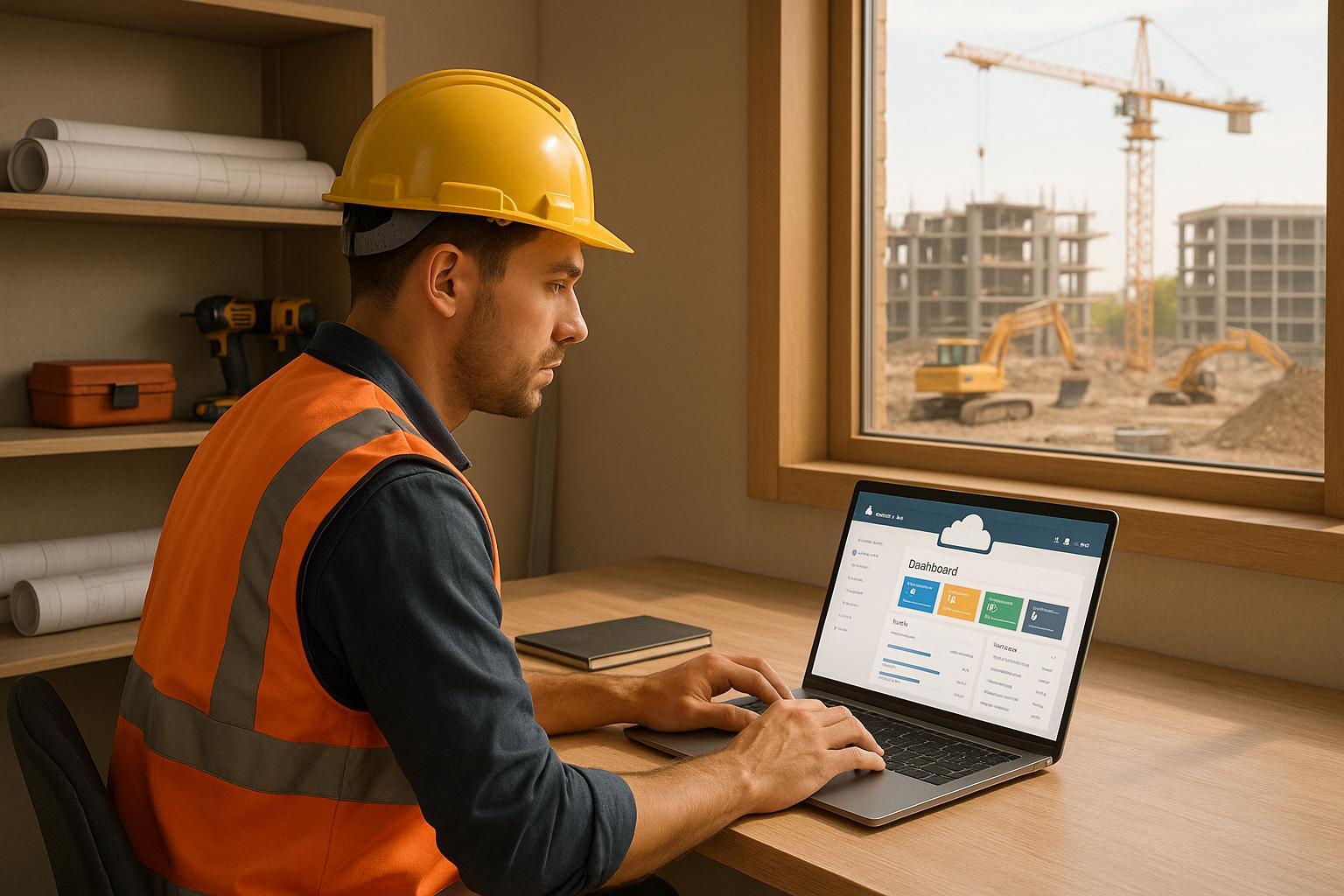
Looking to save money while improving your construction business? Cloud solutions can help small construction firms cut costs by 10-20%, boost operational efficiency by 35%, and reduce project timelines by 15%. They also enable real-time collaboration, secure data storage, and mobile access for field teams.
Key Benefits of Cloud Solutions:
- Cost Savings: Save on IT infrastructure and maintenance.
- Improved Collaboration: Access project data anytime, anywhere.
- Enhanced Efficiency: Streamline workflows and reduce delays.
- Scalability: Adjust resources as your business grows.
Top Affordable Tools for Construction:
- Contractor Foreman: From $49/month, includes project management tools.
- BuildBook: $79/month, great for residential contractors.
- AWS: Flexible pay-as-you-go options, with 92% of users spending under $1,000/month.
Quick Comparison: Pricing Models
| Pricing Model | Description | Best For |
|---|---|---|
| On-Demand | Pay based on usage | Fluctuating workloads |
| Subscription | Fixed monthly/yearly fees | Steady usage |
| Tiered | Different levels with features | Planning to scale |
| Instance-Based | Charges for virtual machine types | Short-term, project-specific |
Pro Tip: Start small with a pilot project and invest in employee training to ensure a smooth transition. Cloud tools aren’t just an upgrade - they’re essential for staying competitive in 2025.
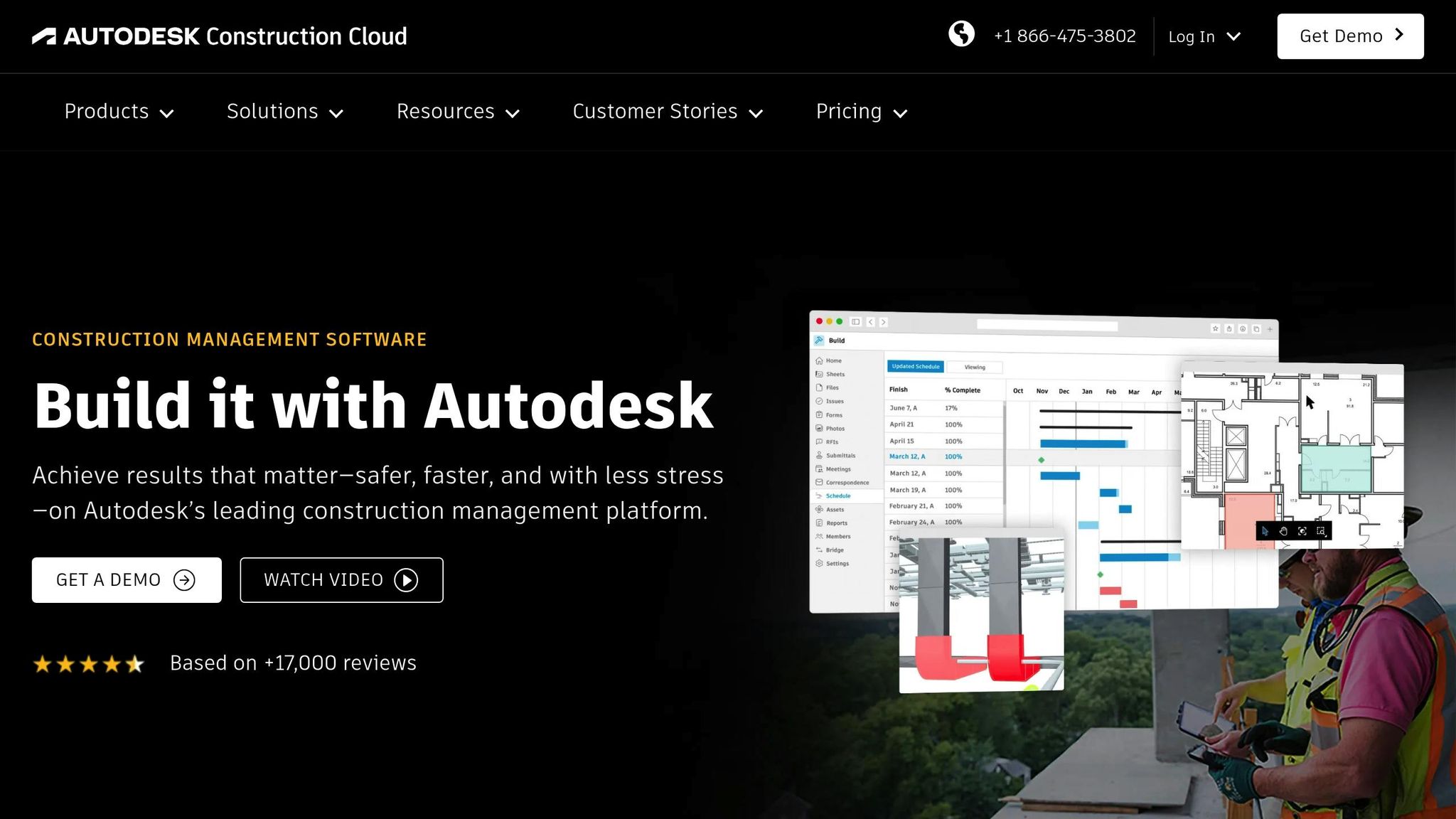
Autodesk Construction Cloud Review: Makes our workflows efficient and agile.
Common Tech Barriers for Small Construction Companies
While cloud solutions bring plenty of advantages, the reality is that 99% of construction firms - most of them small businesses - face specific challenges when adopting digital tools [4]. Here’s a closer look at the main hurdles they encounter when moving to the cloud.
Cost and Resource Limits
Budget constraints are one of the biggest obstacles. For many small construction companies, the expenses tied to setup, training, maintenance, and data migration can feel overwhelming. But, with the right strategy, cloud adoption can turn these obstacles into growth opportunities. Julie Watson, an Application Hosting Expert at Ace Cloud Hosting, highlights an effective approach:
"A practical solution for contractors to deal with this challenge is to opt for cloud hosting services. It is because they need not invest in buying, maintaining, and upgrading advanced IT infrastructure in-house. The chosen cloud solution provider takes care of it all." [3]
In other words, outsourcing IT infrastructure management to a cloud provider can help small firms avoid the heavy upfront costs and ongoing maintenance expenses.
Project and Data Management Issues
Managing projects and data effectively is another pain point. Here are some stats that illustrate the problem:
- 91% of firms report delays that extend project timelines by 21-30% [6].
- 35% of teams spend over 14 hours each week on nonproductive tasks [6].
- 28% of respondents cite a lack of on-site information as a major roadblock to efficiency [6].
Outdated paper-based systems and fragmented processes only make these issues worse. As the Project Management Institute (PMI) notes:
"Communication problems are the #1 reason why most of the projects fail." [6]
Switching to cloud-based tools can streamline communication and ensure that critical data is accessible in real-time, reducing inefficiencies and delays.
Tech Skills and Rules Compliance
A lack of technical expertise is another significant barrier. Research shows that 70% of construction firms lack machine learning and AI skills, and 60% experience resistance to adopting new technologies [4]. Drew Firment, a Cloud Engineer, stresses the importance of investing in people:
"The success of adoption and migrations comes down to your people - and the investments you make in a talent transformation program. Until you focus on the #1 bottleneck to the flow of cloud adoption, improvements made anywhere else are an illusion." [5]
To overcome this, companies should look for cloud services that offer training programs and compliance support. These resources can help teams adapt to new tools and ensure the company meets industry regulations.
Addressing these challenges is essential for construction firms looking to make the most of cloud solutions. Choosing the right provider and investing in proper training can make the transition smoother and more effective.
How to Pick the Right Cloud Service
Choosing the right cloud service means weighing several factors, especially when considering the specific needs of the construction industry. Let’s break down the key areas that can guide your decision.
Price and Payment Options
How you pay for cloud services can significantly impact your budget. With network infrastructure costs expected to hit $253.70 per employee by late 2024 [7], understanding pricing models is essential. Here’s a quick overview:
| Pricing Model | Description | Best For |
|---|---|---|
| On-Demand | Pay-as-you-go based on actual usage | Firms with fluctuating workloads |
| Subscription | Fixed monthly or yearly fees for resources | Companies with steady usage |
| Tiered | Different levels with varying features | Businesses planning to scale |
| Instance-Based | Charges based on virtual machine types | Short-term, project-specific needs |
Growth and Size Changes
Beyond pricing, scalability is a game-changer. For small businesses, moving to the cloud can eliminate the need for on-site servers, potentially saving up to $45,000 annually [8].
To ensure your cloud solution supports growth, consider these factors:
- Auto-scaling: Look for services that automatically adjust to workload demands.
- Cost-Effective Expansion: Providers offering volume discounts can help keep growth affordable.
- Performance Monitoring: Use tools to track how resources are being utilized.
For instance, an Edmonton-based construction company benefited from transitioning its financial tracking to cloud-based accounting software. This change allowed for real-time budget monitoring and significantly reduced costs [10].
Working with Current Tools
Smooth integration with your existing tools is essential for maintaining operational efficiency. To make this happen:
- Integration Requirements: Choose a cloud service that connects seamlessly with your project management and accounting software.
- Data Flow Management: Ensure data formats remain consistent across all systems.
- Scalability Testing: Simulate increased workloads to test integration and document the results [11].
"Businesses can benefit from cloud computing because it enables scalability, resource flexibility, centralized data security, and data accessibility from anywhere", says Amina Bashir, Executive Director at TLP White [9].
Best Low-Cost Cloud Services for Construction
Finding the right cloud services for construction doesn’t have to break the bank. Here’s a look at some affordable options tailored to the industry’s needs.
Construction-Specific Tools
For platforms designed specifically for construction, these services provide targeted features with transparent pricing:
Contractor Foreman stands out with a robust feature set priced at $99 per month for three users, earning a 4.3/5 rating [16]:
| Plan | Price | Key Features |
|---|---|---|
| Basic | $49/month | Core project management |
| Standard | $99/month | Advanced estimating tools |
| Premium | $149/month | Full suite, including equipment tracking |
RedTeam Go caters to smaller contractors, offering a bidding-focused subscription starting at $199 per month. It’s a popular choice among mid-sized commercial contractors, also rated 4.3/5 [16].
BuildBook provides an affordable option at $79 per month, ideal for residential contractors taking their first steps into cloud-based project management.
Basic Cloud Services
For general cloud needs, major providers offer flexible and budget-conscious solutions:
Amazon Web Services (AWS) leads the market with a 30% share. Impressively, 92% of AWS users spend less than $1,000 per month [14], making it a great choice for firms working with limited budgets.
Microsoft Azure is particularly cost-effective for companies already using Microsoft products. With coverage spanning over 60 regions, Azure ensures reliable service and low latency [13].
"AWS and GCP are the Volkswagen and Volvo of cloud computing. You always know you can rely on them for any service and that they’ll take you where your business needs to be with predictable performance. Meanwhile, Azure is akin to a sports car with impressive technology under the hood, but it’s not for everyone." - Oleksii Glib, Acropolium Founder [13]
Service Cost Comparison
Recent studies reveal that 40% of construction management buyers allocate between $175 and $350 per user monthly [15]. Here’s how some popular services stack up:
| Service | Starting Price | Best For | User Rating |
|---|---|---|---|
| ClickUp | $7/user/month | Task management | 4.7/5 [12] |
| Morningmate | $8.99/user/month | Small teams | 4.8/5 [16] |
| nTask | $3/month | Budget-conscious firms | 4.5/5 [12] |
| Clockify | $3.99/seat/month | Time tracking | 4.7/5 [12] |
Smaller firms can begin with these affordable plans and scale as their needs grow. These services allow businesses to pay for only the features they require, maintaining efficiency in project management and collaboration while staying within budget.
Steps to Set Up Cloud Services
Transitioning your construction business to the cloud can be a game-changer, but it requires a structured approach to ensure everything runs smoothly.
Check Company Requirements
Start by evaluating your company’s specific needs. Take a close look at your current applications, workflows, and the compatibility of your hardware and software. This step helps you pinpoint immediate priorities and align your cloud adoption with your goals. Here’s a breakdown to guide your assessment:
| Assessment Area | Key Considerations | Priority Level |
|---|---|---|
| Business Goals | Reducing costs, improving scalability, fostering collaboration | High |
| Current Systems | Age of hardware, software compatibility | High |
| Data Volume | Storage capacity, backup solutions | Medium |
| Network Speed | Bandwidth capabilities, internet reliability | High |
| Security Needs | Compliance standards, data protection | Critical |
Test with Small Projects
Once you’ve outlined your requirements, the next step is to test your strategy on a smaller scale. Launch a pilot project to evaluate the effectiveness of your cloud solution and fine-tune your approach. For example, you could test cloud tools on a single residential project, streamline document management for one department, or improve crew time tracking.
In one case, a pilot project led to a 60% boost in processing speed and reduced manual data entry by 75% [17]. These kinds of results can help build confidence in your cloud transition.
Employee Training and Implementation
After a successful pilot, it’s time to prepare your team to use the new cloud tools effectively. Proper training is key - studies show that 59% of employees see improved performance when they receive adequate technology training [19].
Develop a training program that includes:
- An introduction to basic cloud concepts and security practices
- Step-by-step instructions for daily operations
- Regular refresher sessions to keep skills sharp
- Access to help resources and peer mentoring for ongoing support
"During a cloud transformation journey, one of the biggest challenges you may face is not the adoption of the technology itself, but rather the ability to create a culture that encourages continuous growth, improvement, and learning." - AWS [18]
For construction teams, focus on short, hands-on training sessions. This microlearning approach minimizes downtime while ensuring employees are ready to hit the ground running [19].
Data Safety and Rules
Data breaches are a costly issue, averaging $4.88 million in 2024 alone [21]. For small construction firms, safeguarding sensitive project details while adhering to regulations doesn’t have to be overwhelming - it just requires a solid plan.
Secure Project Data
| Security Layer | Implementation | Cost Impact |
|---|---|---|
| Access Control | Multi-factor authentication and role-based access | Low to Medium |
| Data Protection | Encryption for stored and transmitted data | Low |
| Network Security | Firewalls and secure VPN connections | Medium |
| Monitoring | Security logs and threat detection tools | Low to Medium |
To protect your project data, prioritize encryption, role-based access, and multi-factor authentication across all systems. Regular security audits and vulnerability checks are essential to maintain data integrity.
"Cloud security includes everything you do to protect the confidentiality, integrity, and accessibility of clouds from attacks and accidents." - ISOutsource [20]
The numbers don’t lie: 45% of data breaches are cloud-based, and 82% involve data stored in the cloud [21]. To combat this, establish clear data governance policies and train your team on security best practices.
With robust data security in place, the next step is ensuring compliance with OSHA standards.
Meet OSHA Requirements
Cloud-based tools make OSHA compliance easier than ever. Yet, as of OSHA’s 2025 study, 30% of construction firms still haven’t embraced digital solutions for safety compliance [22].
Key compliance measures include:
- Digital safety checklists and inspection forms
- Automated compliance reporting
- Cloud-based safety documentation
- Real-time incident reporting
"Using the right safety management tools, safety managers can rest assured they will reduce safety issues and remain in compliance. Cloud-based safety management systems provide a streamlined platform to maintain real-time data in a secure location." - Kevin Richards, EHS Director - North America, ProcessMAP [24]
Construction companies consistently face the highest number of OSHA citations nationwide [23]. To stay ahead, maintain detailed digital records of:
- Safety training sessions
- Equipment inspections
- Incident reports
- Risk assessments
- Compliance audits
Conducting regular digital safety audits helps identify potential problems before they escalate into violations. This proactive approach not only reduces workplace incidents and costs but also keeps projects running smoothly.
Conclusion: Update Your Business with Cloud Tools
Cloud technology has become a game-changer for small construction firms. Companies leveraging cloud solutions often see substantial benefits: 26% faster growth, 21% higher profitability, 10-20% reductions in project costs, 34% improved cost forecasting, 35% better operational efficiency, and project timelines that are 15% shorter [1][2].
But it’s not just about numbers. The real advantage lies in how cloud tools transform operations. They enable teams to collaborate in real time, automate repetitive tasks, and provide instant access to critical project data. These capabilities allow smaller firms to compete effectively with larger competitors while keeping expenses in check.
With 63% of businesses already reporting improved scalability thanks to cloud technology [1], it’s clear that adopting these tools is no longer optional - it’s essential for staying competitive in the years ahead. The evidence is clear, and the time to act is now.
Choose solutions tailored to your business needs, prioritize data security, and focus on tools that support long-term growth. By investing in cloud technology today, you can streamline operations, cut costs, and position your firm for success in the future.
FAQs
What are some practical ways small construction firms can affordably transition to cloud solutions?
Small construction firms can move to cloud-based solutions without breaking the bank by focusing first on core services that meet their immediate needs - like project management or team collaboration tools. Starting small and adding more services over time helps keep costs manageable while easing into new systems and workflows.
Choosing cloud platforms with flexible pricing options, such as pay-as-you-go or subscription plans, is another smart way to manage expenses. Many providers even offer free trials or credits, allowing firms to test out tools before committing any funds. This step-by-step method ensures a smoother transition while keeping budgets on track.
How can small construction firms seamlessly integrate cloud solutions into their current tools and workflows?
To make the shift to cloud solutions as seamless as possible, small construction firms should begin by taking a close look at their current tools and workflows. Pinpoint the processes that could use some improvement and think about how cloud services might fill those gaps while boosting overall efficiency. Key areas to focus on include project management, team collaboration, and data storage, ensuring the solutions align with your specific business needs.
Once you’ve identified your needs, choose an integration method that matches your team’s technical skills. You can opt for API-based integrations to enable real-time data sharing, middleware tools to bridge different systems, or no-code platforms if you prefer a simpler setup that doesn’t require technical expertise. After implementation, make sure to provide your team with the training they need to feel comfortable using the new tools. Regularly monitor how the integration is performing so you can quickly tackle any issues that arise. By following these steps, small construction firms can upgrade their operations while keeping disruptions to a minimum.
How can cloud solutions help small construction firms stay compliant with regulations and improve workplace safety?
How Cloud Solutions Help Small Construction Firms Stay Compliant
Cloud solutions are transforming how small construction firms manage safety protocols and regulatory requirements. By centralizing critical documents like safety guidelines and training materials, these tools ensure that every team member has quick access to the latest updates. This eliminates confusion and keeps compliance consistent across all projects.
Beyond document management, cloud-based platforms simplify the process of tracking and analyzing safety data from multiple job sites. With these tools, firms can pinpoint gaps, address risks, and take corrective actions to prevent accidents. This approach not only helps meet regulatory standards but also boosts efficiency and promotes a safer work environment for everyone involved.
Related Blog Posts
- Cloud vs. On-Premise: The Right Architecture for Construction Software Startups
- 7 Cloud-Based Tools Revolutionizing Construction Project Management in 2025
- How Small AEC Firms Can Leverage Cloud Technology to Win Enterprise Projects
- Transitioning from Traditional CAD to Cloud-Based AEC Platforms: A Cost-Benefit Analysis