How Small AEC Firms Can Leverage Cloud Technology to Win Enterprise Projects
By Taher Pardawala · Co-Founder & Chief Executive Officer

Small AEC firms can compete for large-scale projects by adopting cloud technology. Cloud tools streamline workflows, improve collaboration, and cut costs, helping firms overcome limited resources and outdated systems. Here’s how:
- Centralized Data: Cloud platforms like BIM 360 allow teams to collaborate in real-time, reducing rework to less than 1% (compared to the industry average of 8-10%).
- Cost Savings: Firms using cloud solutions report up to 47% cost savings and stronger resilience.
- Enhanced Security: Advanced encryption and access controls protect sensitive project data.
- Scalability: Cloud infrastructure adapts to project-specific needs, making it easier to handle enterprise-level demands.
- Improved Communication: Tools like Procore and real-time dashboards increase transparency and cut processing times by up to 75%.
Building the Connected AEC Firm
Key Cloud Tools for Project Management
Cloud-based tools are reshaping how small AEC (architecture, engineering, and construction) firms manage projects. By adopting integrated cloud solutions, these firms have managed to cut down rework to less than 1%, a significant improvement compared to the industry average of 8-10% [3]. Leading platforms like BIM 360, Procore, and advanced client communication tools are at the forefront of this transformation [3].
BIM 360 for Team Coordination
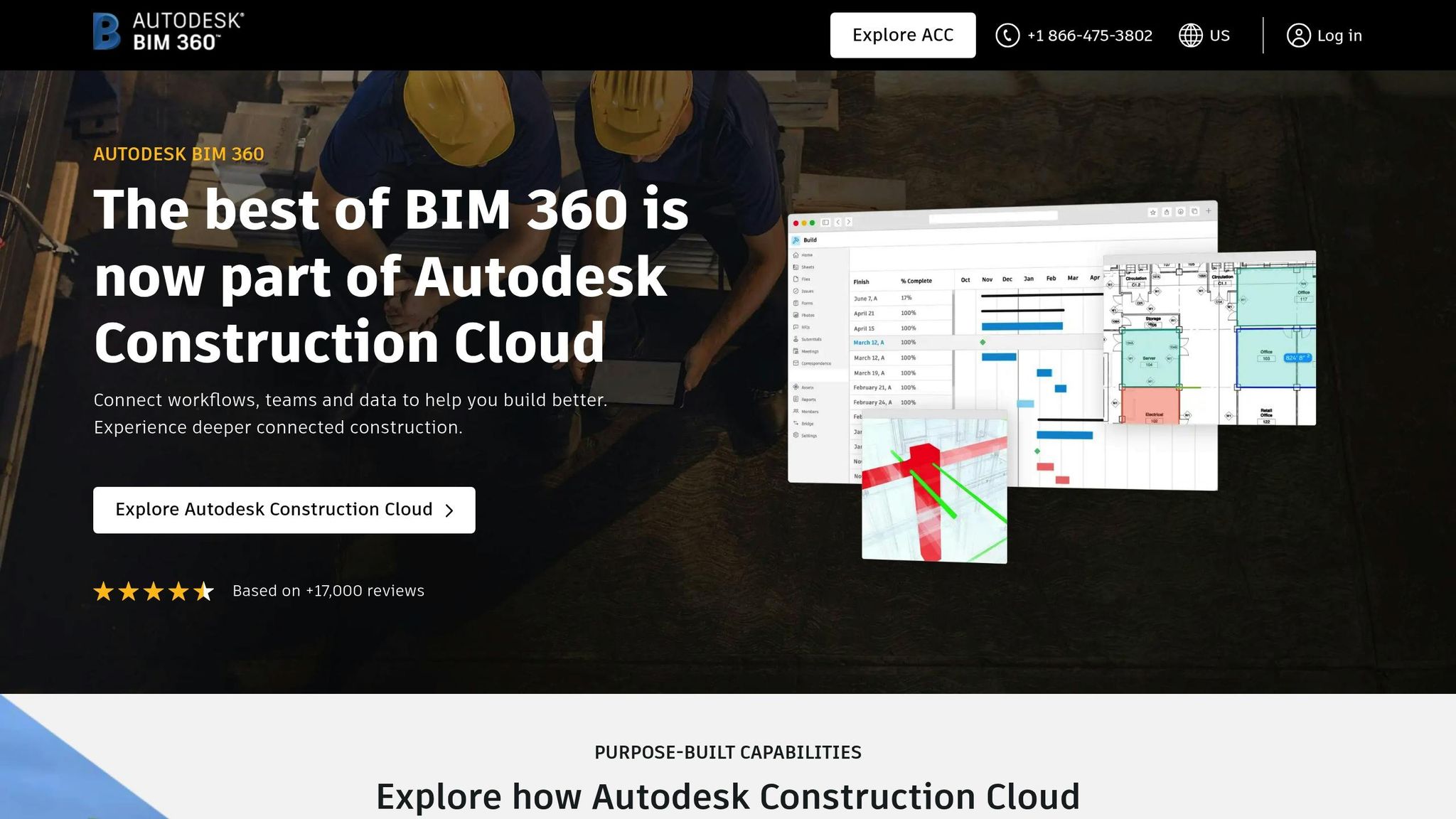
BIM 360 provides small firms with large-scale collaboration capabilities, helping them overcome resource limitations while streamlining workflows. Acting as a central hub, it allows teams to manage models, documents, and workflows in real time, ensuring everyone stays on the same page.
Matt Hamann, Director of Support Services at Saunders Construction, highlights the platform’s value:
"When we go out to the field, we’re not experiencing big ‘gotchas’ where we’re forced to make last-minute decisions. With Autodesk Construction Cloud, we can maintain design integrity across the project lifecycle and ensure our clients get the building they’re expecting." [2]
BIM 360’s common data environment (CDE) plays a key role in improving project outcomes by enabling teams to:
- Combine models from different disciplines into one platform
- Identify and resolve issues early, before they escalate
- Maintain accurate version control throughout project phases
- Access critical project data from any location
Kurt Smith, Project Manager at Arcadis, shares his experience:
"We got all our subs working in a single model … It helped streamline things, prevent errors. Everything’s up to date because everybody’s working in the model." [4]
Platforms like Procore, which integrate seamlessly with BIM 360, further enhance project efficiency and collaboration.
Procore Project Management Features

Procore proves to be a game-changer, especially for larger projects, offering measurable returns on investment. Green Mechanical’s experience with Procore showcases its practical benefits:
- Cut purchase order processing time from 32 minutes to just 7
- Reduced the cost per purchase order from $18.23 to $4.73
- Saved $115,000 in the first year alone
- Supported $10 million in business growth within 12 months [6]
Dana Erdman, Director of Technology & Innovation at Bulley & Andrews, explains how Procore’s integration capabilities simplify workflows:
"The business as a whole has seen just a time savings on a number of different things that we don’t have to hand-key anymore because of the CMiC integration work that we’ve done." [5]
This level of efficiency allows firms to focus more on scaling their operations and less on repetitive administrative tasks.
Client Communication Platforms
Effective client communication tools are another critical component, offering transparency and cutting processing times by up to 75% [7]. Levi Naas, Director of Development at MultiGreen, underscores the importance of open communication:
"Everybody can see if there’s an issue. It’s all about transparency and having everybody working together to create the necessary solution to keep the project on schedule." [4]
To improve communication, small firms can take advantage of tools that offer:
- Real-time project dashboards to keep stakeholders informed
- Centralized document sharing for easy access to key files
- Automated notifications to ensure timely updates
- Mobile-friendly interfaces for on-the-go access
These features create an environment where communication is seamless, enabling smaller firms to compete effectively on larger-scale projects while maintaining high standards of professionalism and efficiency.
Setting Up Cloud Infrastructure
Cloud infrastructure enables small AEC firms to tackle enterprise-level projects with greater efficiency. Research indicates that well-configured cloud systems can cut operational costs by as much as 33% [9].
AWS Setup Guide
To support design and engineering workflows, start by focusing on essential services:
Core Infrastructure Components:
- Amazon WorkSpaces: Access resource-heavy applications remotely without compromising performance.
- Secure Storage: Safely store project files and BIM models.
- Computation Resources: Deploy tools for rendering and analytical tasks.
For example, Aligned Technology Group reduced their monthly AWS expenses by 51% by scaling resources strategically and eliminating unused services.
Connecting Legacy Systems to Cloud
Migrating legacy systems to the cloud can be streamlined using the "7 R’s" migration framework:
- Assessment Phase: Identify current applications, dependencies, and data flows to understand your starting point.
- Migration Planning: Create a roadmap prioritizing critical systems, and track progress using AWS Migration Hub.
- Implementation: Leverage AWS tools for a smooth transition:
- AWS Database Migration Service for moving data.
- AWS Application Migration Service for transferring applications.
- AWS Server Migration Service for migrating servers.
Cloud Cost Control Methods
Managing cloud expenses is crucial for staying within budget. Here’s a quick overview of cost-saving strategies:
| Strategy | Potential Savings | Implementation Method |
|---|---|---|
| Reserved Instances | Up to 42% | Commit to a one-year term, no upfront cost [8] |
| Compute Savings Plans | Up to 54% | Flexible one-year plans with no upfront cost [8] |
| Spot Instances | Up to 90% | Ideal for flexible, non-critical workloads [9] |
| Instance Scheduling | Up to 70% | Automate shutdowns for non-production instances [9] |
Additional Cost Optimization Tips:
- Use AWS Cost Explorer to monitor and analyze spending patterns.
- Set up AWS Budgets to receive alerts when costs approach predefined thresholds.
- Right-size resources based on actual usage to avoid over-provisioning.
- Implement storage lifecycle policies to manage data efficiently.
A great example of cost control in action is ST Unitas, which reduced their cloud expenses by nearly 60% by effectively utilizing reserved instances [9].
These strategies enable small AEC firms to operate with the efficiency and competitiveness needed to handle large-scale projects effectively.
Cloud Security Requirements
Securing enterprise-level projects demands strong cloud security strategies. A striking statistic highlights the urgency: 59% of AEC firms have faced cybersecurity threats in the last two years [12]. Clearly, safeguarding sensitive project data is no longer optional - it’s a must.
AEC Security Standards
ISO 19650-5:2020 serves as the cornerstone for security-focused information management in AEC projects [10]. This standard lays out key requirements to protect critical project data effectively.
Here’s a quick breakdown of essential components and their business impact:
| Security Component | Implementation Requirement | Business Impact |
|---|---|---|
| Information Containers | Unique identification system | Avoids data confusion and overlap |
| Naming Conventions | Standardized format across projects | Ensures consistent file tracking |
| Data Classification | Clear security levels | Regulates access to sensitive information |
| Revision Control | Documented change management | Preserves data integrity |
| Information Flow | Controlled distribution channels | Limits unauthorized sharing |
While adhering to these standards is a great starting point, organizations must go further to protect their data against modern threats.
Data Protection Steps
Effective data protection hinges on three pillars: strong authentication, encryption, and continuous monitoring. The shared responsibility model clarifies that cloud providers and AEC firms each have distinct roles in securing data [11].
Key Security Measures:
- Authentication Protocols
Use multi-factor authentication (MFA), passwordless options, and role-based access controls to strengthen login security. - Data Encryption
Encrypt data both at rest and in transit using established industry protocols to keep it secure. - Monitoring and Response
Implement security logging, centralized monitoring with SIEM systems, and automated threat detection to quickly identify and address vulnerabilities.
For added protection, consider using a Common Data Environment (CDE) with features like work-stage folders, role-based permissions, pre-configured security templates, and file naming validators. These tools streamline security while reducing human error.
Small AEC firms, in particular, should note that more than 80% of corporate data is classified as "dark" [11], meaning it’s unstructured and often unmonitored. Deploying tools to identify and protect this data is critical. Regular security assessments and employee training programs also play a vital role in building a resilient security framework.
As small AEC firms increasingly embrace cloud solutions, these measures become even more essential.
Small Firm Success Examples
Recent success stories highlight how cloud technology is leveling the playing field for small AEC firms, enabling them to tackle enterprise-level projects. These examples pave the way for deeper dives into case studies focused on project management and infrastructure advancements.
BIM 360 Project Example
CPPI provides a compelling example of how adopting cloud tools can transform project management. By integrating Autodesk Build, the firm saw productivity triple and achieved better cost accuracy [13].
Brad Buckles, CPPI’s Director of Technology, shared how the tool reshaped their operations:
"With Build, we can make informed decisions, and there’s no longer a divide between knowledge across our teams. Project managers are empowered to produce reports; they don’t have to wait for accounting. This streamlines our process and allows project managers to make real-time project decisions." [13]
Another standout example is Buro Happold‘s work on the Hudson’s Site Development project in Detroit, a massive 1.4 million square foot mixed-use tower. Using BIM 360 Design, the firm seamlessly coordinated teams across five global offices [15]. The results speak for themselves, with significant gains in workflow efficiency:
| Metric | Before Cloud | After Cloud |
|---|---|---|
| Model Opening Time (VPN) | 29 minutes | 1 minute |
| Large Project Access | 3-4 hours | Few minutes |
| Team Collaboration | Limited by location | Global access |
Cloud Infrastructure Results
Cloud infrastructure has also delivered noticeable benefits beyond project management. RIOS, an international design collective, successfully moved to cloud-based file management with Egnyte [14].
Bob Frederick, Director of Computational Design at RIOS, explained the advantages:
"With Egnyte, we get the file server experience we’ve had for the last decade, with all the modern features of a cloud platform… If you’re running a suite of CAD tools and managing lots of computational design files across multiple locations, and don’t want to spend all your energy managing infrastructure and learning new processes instead of advancing your projects, Egnyte is for you." [14]
Oktra, another firm leveraging cloud technology, reported significant productivity improvements. Alex Turner, Head of Digital Design and Construction at Oktra, noted:
"This has saved a designer on average half an hour a day…this is value that we can see straight away from using Autodesk Construction Cloud." [13]
Paul McGilly, Associate Principal of Digital Design, highlighted an additional benefit:
"These improvements were as much about work-life balance as they were about time savings and radically increasing our collaborative data sharing." [15]
The impact is clear: 82% of engineers reported enhanced performance and productivity when using cloud-based tools [15].
Conclusion: Next Steps for Cloud Adoption
To move forward, organizations need a well-thought-out cloud adoption plan that builds on the tools and infrastructure already in place. According to PwC’s 2023 Cloud Business Survey, 28% of Engineering and Construction (E&C) companies are fully committed to cloud adoption, while 47% report measurable cost savings and stronger resilience as a result [1].
David Anderson, Director of Engineering & Construction at PwC US, emphasizes the importance of a unified approach:
"Establishing a solid foundation means putting in place a single, integrated technology platform from which the business can operate." [1]
A structured roadmap can significantly accelerate this process:
| Implementation Phase | Key Actions | Expected Outcomes |
|---|---|---|
| Foundation Setup | Deploy cloud ERP system for financial management | Streamlined operations, reduced IT overhead |
| Data Integration | Create unified data repository | Improved collaboration and stakeholder accessibility |
| Security Implementation | Configure access controls and encryption | Enhanced data protection, regulatory compliance |
| Team Training | Provide hands-on platform training | Increased adoption, reduced resistance |
To minimize inefficiencies, prioritize solutions with flexible licensing and mobile accessibility. Research shows that construction professionals spend 35% of their time on nonproductive tasks, underscoring the need for efficient tools [17].
Vikram Jain, Practice Director at Advaiya Solutions, highlights the importance of managing this transition effectively:
"Foster a change management strategy that involves clear communication, emphasizes the long-term benefits, and involves key stakeholders from the beginning. Provide hands-on demonstrations to show the efficiency and accessibility advantages of cloud-based BIM." [16]
Regularly monitoring and fine-tuning cloud investments is essential. For instance, 48% of E&C respondents report improved stakeholder trust through better cybersecurity and privacy measures [1]. Beyond technology, a data-driven culture is critical to maximizing the benefits of cloud adoption.
As seen in the earlier case studies, aligning the right strategies with the right technologies allows smaller AEC firms to compete for and secure enterprise-level projects.
FAQs
How can small AEC firms keep their data secure when using cloud technology for large projects?
How Small AEC Firms Can Secure Data in the Cloud
When small AEC firms use cloud technology for enterprise projects, keeping data secure should be a top priority. Here are some steps to help protect sensitive information:
- Encryption: Encrypting data is a must. It ensures that even if files are intercepted, they remain unreadable without the proper decryption keys.
- Access Controls: Using tools like multi-factor authentication (MFA) can limit access to critical files, making sure only authorized users can get in.
- Audit Trails: Keeping detailed logs of file activity helps track who accessed what and when, making it easier to spot unusual behavior.
Beyond technical measures, cybersecurity training for employees is equally important. Mistakes like clicking on phishing emails or using weak passwords can lead to breaches, so regular training helps everyone stay vigilant.
For an extra layer of defense, consider teaming up with a cybersecurity provider. These experts can monitor threats in real time and respond to risks before they escalate. By blending these strategies, small AEC firms can confidently embrace cloud technology while keeping their data secure.
What are the costs of adopting cloud solutions for small AEC firms, and how can they save money in the process?
Adopting cloud solutions might feel like a hefty expense for small AEC firms at first, but it often pays off in the long run with significant savings. By switching to cloud-based tools, firms can say goodbye to the high costs of on-site servers and hardware. Instead, they can tap into flexible, pay-as-you-go services that adjust as their business grows.
Cloud platforms also help trim costs by making operations more efficient, improving teamwork, and keeping projects on track. For instance, cloud-based project management tools ensure everyone has real-time access to the latest project updates, reducing mistakes and expensive rework. Many firms have also found that embracing the cloud cuts IT maintenance and operational costs while boosting productivity and decision-making.
To get the most out of cloud adoption, small AEC firms should focus on tools that solve their biggest pain points first - like streamlining project collaboration or improving data access - and then expand their cloud use as their needs evolve.
How can cloud tools like BIM 360 and Procore help small AEC firms manage large-scale projects more efficiently?
Cloud platforms such as BIM 360 and Procore are game-changers for small AEC firms tackling large-scale projects. They enable real-time collaboration, simplify communication, and centralize project data, creating a single, reliable source of information. This helps keep everyone on the same page and reduces the chances of mistakes throughout the project.
With cloud-based tools, teams can access the latest project details from anywhere, which boosts coordination and supports better decision-making. This approach not only cuts down on expensive rework but also improves communication with clients, giving smaller firms the ability to handle big projects with precision and confidence.