Custom vs Template Solutions: When to Invest in Professional Development
By Taher Pardawala · Co-Founder & Chief Executive Officer
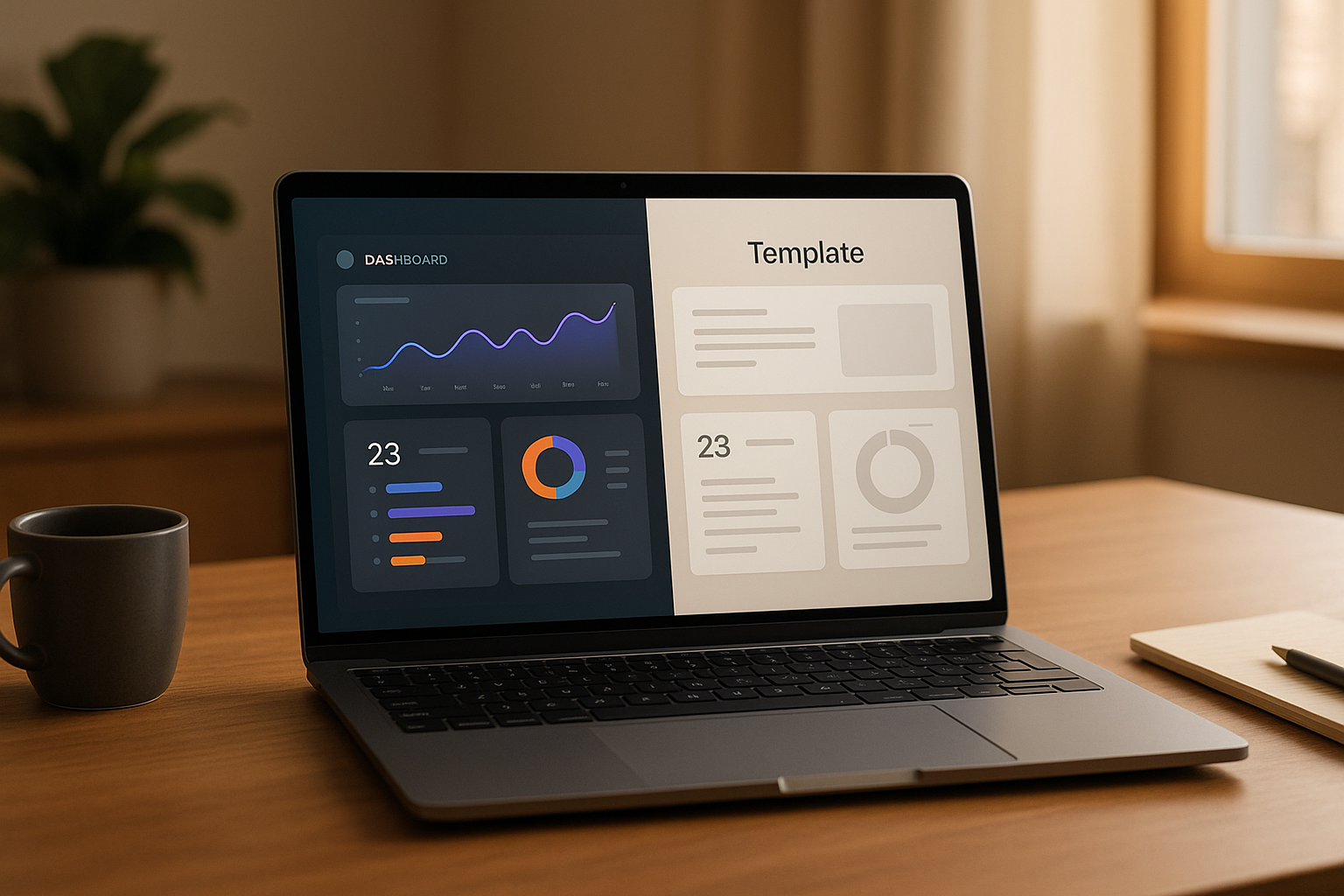
When deciding between template solutions and custom software development for your startup, the choice boils down to speed, cost, and scalability. Template solutions are fast and affordable, ideal for launching quickly and testing ideas. However, they often lack flexibility, scalability, and advanced features. Custom development, while more expensive and time-consuming, provides tailored features, scalability, and full control over your software.
Key Points:
- Templates: Quick to deploy, lower cost, but limited in customization and scalability. Best for early-stage startups or MVPs.
- Custom Development: Higher upfront cost and longer timelines but offers scalability, unique features, and compliance capabilities. Ideal for long-term growth.
Quick Comparison:
| Factor | Template Solutions | Custom Development |
|---|---|---|
| Time to Market | Weeks | Months |
| Initial Cost | Lower | Higher |
| Scalability | Limited | Built for growth |
| Customization | Restricted | Fully tailored |
| Ownership | Platform-dependent | You own the code |
| Compliance | Limited | Fully customizable |
If you’re just starting out, templates can save time and money. But as your business grows, custom development becomes necessary to overcome limitations, ensure scalability, and meet compliance needs. Recognizing when to make the switch is key to long-term success.
What’s Better A Template or Custom Website
Template Solutions Explained
Let’s dive deeper into the concept of template solutions, exploring how they work and what they bring to the table.
What Are Template Solutions?
Template solutions are essentially pre-designed frameworks that come with built-in functionality. Think of platforms like Bubble, Webflow, and Airtable for no-code development, or OutSystems and Mendix for low-code options. There are also SaaS templates tailored to deliver ready-to-use business applications.
The magic lies in their simplicity. These platforms offer drag-and-drop interfaces and pre-made modules, making it easy for users to personalize basic elements such as colors, layouts, and features. With these tools, founders can quickly assemble applications without starting from scratch.
At their core, template solutions are built on standardized components that handle common business needs - like user authentication, payment systems, or data storage. Users can tweak these components within predefined limits to align with their specific goals.
Benefits of Template Solutions
Template solutions shine when speed and affordability are top priorities. Unlike custom development, which often requires a hefty budget just to build a basic MVP (Minimum Viable Product), these solutions offer a much lower financial barrier to entry. Plus, ongoing costs are generally more predictable and manageable.
For non-technical founders, this is a game-changer. They can quickly build prototypes, test ideas, and make adjustments - all without needing to hire developers. Many platforms even take care of operational tasks, reducing the administrative burden.
For startups working with tight budgets, this approach can be a lifeline. Template solutions allow them to create functional demos, validate early assumptions, gather user feedback, and pivot as needed - all without breaking the bank.
Template Solution Drawbacks
However, template solutions aren’t without their challenges. As a startup grows, these platforms may start to feel restrictive. Scalability issues, limited customization options, and vendor lock-in can create hurdles that are tough to overcome. These limitations often lead to what’s known as "technical debt", where temporary fixes or workarounds result in systems that are harder to maintain long-term.
Compliance is another sticking point, especially for industries with strict regulations. Meeting security and audit requirements can be difficult when using shared resources, which many template solutions rely on. As user bases expand, performance issues like slower response times or reduced reliability may also crop up.
Lastly, integrating with specialized third-party systems or older, legacy software can be problematic. Many template platforms offer limited API capabilities, which can restrict how well they connect with other tools or systems.
Custom Software Development Overview
Unlike pre-built solutions that focus on quick deployment, custom software development emphasizes aligning technology with your long-term business goals.
What Is Custom Software Development?
Custom software development is all about creating applications tailored specifically to your business needs. Instead of adapting to generic tools, you get to design technology that matches your vision. This process involves collaborating with engineering teams to design, build, and implement software that addresses your unique challenges and opportunities.
The journey typically begins with detailed requirements gathering. Developers work closely with your team to understand your business logic, workflows, and technical needs. From there, they design and build a solution using programming languages, frameworks, and databases that best fit your project.
Unlike template-based solutions, which rely on pre-built components, custom development gives you complete control over your application. You decide how data flows, which features to prioritize, and how users interact with your product. This control extends from the user interface design to the structure of the database powering your application.
Benefits of Custom Development
Custom software development offers a level of flexibility and control that is hard to match. Here are some key advantages:
- Tailored Features and Workflows: Build features and workflows that align perfectly with your business needs.
- Scalability: As your business grows, custom solutions can evolve to handle increased demand without hitting preset limits.
- Ownership: Having full control over your software’s code and functionality creates lasting competitive advantages.
- Industry-Specific Compliance: For sectors like healthcare, finance, or legal services, custom software can incorporate essential security measures, audit trails, and compliance features that off-the-shelf solutions often lack.
- Seamless Integration: Custom solutions can integrate smoothly with legacy systems, APIs, and third-party tools.
These benefits make custom development an appealing choice, especially for businesses with unique needs or operating in compliance-heavy industries. However, it’s not without its challenges.
Custom Development Challenges
While custom software development offers significant benefits, it also comes with its share of challenges:
- Cost: Custom development isn’t cheap. Depending on the complexity, costs can range from $10,000 to well over $100,000.
- Timeline: Unlike template solutions that can launch in days or weeks, custom development often takes 2 to 6 months for an initial version. This requires careful planning and may delay your market entry.
- Expertise Requirement: Building custom software demands experienced developers. You’ll need to either hire skilled in-house talent or partner with a trusted development team, which can add complexity to your hiring or vendor selection process - especially for non-technical founders.
- Ongoing Maintenance: With custom software, your team becomes responsible for updates, bug fixes, performance improvements, and feature upgrades. This requires dedicated technical resources or a long-term partnership with your development team.
- Increased Decision-Making: Unlike using pre-built software, custom development involves making numerous technical decisions - everything from the architecture and tech stack to security protocols and feature prioritization. This can be overwhelming without technical expertise or a reliable development partner.
Custom software development is a powerful way to create technology that truly serves your business, but it requires careful consideration of both its advantages and the challenges it brings.
Template vs Custom: Decision Factors
Deciding between a template solution and custom development isn’t just about crunching numbers - it’s about finding the right fit for your startup’s unique needs and long-term goals. The right choice depends on how well the solution aligns with your business strategy and technical requirements.
Side-by-Side Comparison: Template vs Custom
To help you navigate this decision, here’s a detailed look at the key differences between template solutions and custom development for US-based startups:
| Factor | Template Solutions | Custom Development |
|---|---|---|
| Time to Market | Quick setup, typically within weeks | Longer timelines, often several months |
| Initial Investment | Lower upfront costs with predictable fees | Higher upfront costs for development |
| Scalability | Limited by platform constraints | Designed to grow with your business |
| Customization | Limited to existing features | Fully tailored to your specific needs |
| IP Ownership | Ownership remains with the platform | You own the code and assets entirely |
| Security Control | Standard platform-level security | Customizable for enhanced security |
| Maintenance | Managed by the solution provider | Requires dedicated resources or partnerships |
| Long-term Costs | Recurring fees that can add up | Upfront costs plus ongoing maintenance |
While templates offer a fast and cost-effective way to launch, their recurring fees and limited flexibility can become a challenge as your business scales. On the other hand, custom solutions demand a higher initial investment but provide the adaptability and control needed for long-term growth.
Choosing the Right Approach for Your Startup
Here are some additional considerations to guide your decision:
- Speed and Validation: If you’re in the early stages and need to validate your idea quickly, templates are ideal. They allow you to gather feedback and iterate without a heavy upfront investment.
- Unique Requirements: For startups dealing with complex workflows, specialized integrations, or strict compliance standards, custom development is often the better path.
- Hybrid Strategies: You don’t have to commit to one approach forever. Many startups begin with templates to test the waters, then invest in custom development once they’ve proven demand and secured additional funding.
Technical complexity is another critical factor. If your product involves intricate data processing, multiple user roles, or deep integrations, custom development is likely the way to go. Meanwhile, startups focused on speed and experimentation can benefit greatly from the simplicity and efficiency of templates. As your business grows, custom solutions may become essential to stay competitive and meet evolving demands.
When to Choose Professional Development
Deciding when to move from templates to custom development is a big step. It’s not just about outgrowing your current platform; it’s about spotting the signs that your existing setup might be holding you back before it becomes a serious problem.
Signs You Need Professional Development
There are several clear signals that it’s time to invest in professional development services:
- Platform limitations: If you’re constantly running into restrictions or struggling to implement features that your users are asking for, it may be time to consider custom development. Templates can only take you so far, and at some point, they can become barriers rather than tools.
- Compliance requirements: Handling sensitive data or working in regulated industries often demands more robust security than template platforms can provide. For instance, creating a healthcare app that meets HIPAA standards or a payment system that complies with PCI DSS is nearly impossible with most template solutions[1].
- Performance bottlenecks: If your app slows down, crashes, or struggles to handle heavy user traffic, it’s a sign that your current platform can’t keep up with your growing user base. Custom development lets you build scalable systems designed to handle growth without sacrificing performance.
- Vendor lock-in risks: Relying too heavily on a template platform means you’re tied to their pricing, updates, and even their continued operation. If the vendor changes their terms, pivots their focus, or shuts down, your business could face costly migrations or disruptions[3][4].
- Unique feature needs: Sometimes, your product requires features that simply can’t be achieved with templates. Take the example of a Southeast Asian logistics startup that needed real-time route optimization and dynamic pricing - features their template platform couldn’t support, forcing a shift to custom development[1].
- Investor expectations: As startups grow and seek funding, investors often prefer custom solutions because they offer better scalability, security, and ownership. A custom-built platform can make your business more attractive to potential backers[4].
Recognizing these signs early can save you from unnecessary headaches down the road. That’s where AlterSquare steps in to make the transition smoother.
How AlterSquare Supports Startups
When it’s clear that custom development is the next step, having a reliable partner is crucial. AlterSquare offers engineering-as-a-service to help startups overcome limitations and build tailored solutions.
Their phased delivery framework is designed to reduce risk and provide clarity. It starts with discovery and strategy to define technical needs and compliance requirements. Then, during the design and validation phase, they focus on user-centric solutions before diving into code. Agile development ensures quick iterations based on real feedback.
Rapid prototyping is another key feature. It allows startups to test and refine features before committing to full-scale development, ensuring momentum isn’t lost during the transition[2].
With AI-driven development, AlterSquare speeds up the process while keeping costs manageable. By leveraging tools like generative AI and modern frameworks (such as Vue.js, Nuxt.js, GoLang, and Node.js), they deliver custom solutions faster than traditional methods, making it an option even for startups with limited resources.
AlterSquare’s scalability-first approach ensures that your custom solution isn’t just built for today but can grow with your business. Their systems are designed to handle increasing user loads, new features, and evolving compliance needs without requiring a complete overhaul.
For startups dealing with strict regulations, AlterSquare brings compliance expertise to the table. Whether it’s HIPAA for healthcare, PCI DSS for payments, or CCPA for data privacy, they ensure your app meets these standards from the ground up.
Worried about timelines? AlterSquare’s 90-day MVP program is a structured pathway to move from template-based limitations to a market-ready custom solution. This program combines rapid prototyping, tech stack consulting, and agile sprints to deliver results within a predictable timeframe.
One of the biggest benefits of choosing professional development early is avoiding technical debt. Delaying the transition can lead to patchwork solutions that become costly to fix later. By starting with a solid foundation, startups can save time, money, and stress in the long run[4].
Conclusion: Matching Solutions to Startup Goals
The choice between template solutions and custom development boils down to your startup’s current needs and long-term vision. Each serves a unique role in your journey, and knowing when to transition can save you from unnecessary hurdles and pave the way for sustainable growth.
Template solutions are perfect for launching your MVP quickly. They help you test your ideas, gather feedback, and conserve resources. With templates, startups can roll out a functional MVP in weeks, preserving both time and funding while refining their product direction.
On the other hand, custom development becomes critical when your startup needs to stand out, scale effectively, or meet specific requirements like compliance. For example, one startup moved from a low-code platform to custom development to implement scalable features that set them apart in a crowded market[1].
Key indicators like performance issues, platform limitations, compliance challenges, or vendor lock-in signal it’s time to consider custom solutions. Delaying this shift often leads to technical debt and expensive rebuilds. Acting early, with a clear strategy, can prevent these setbacks and ensure smoother scaling.
Although custom development involves higher upfront costs, startups that make the move early - before rapid user growth or significant external funding - often spend less in the long run compared to those that delay[4]. Programs like AlterSquare’s 90-day MVP model show that scalable custom development can happen quickly without sacrificing quality.
Once you’ve validated your market fit, it’s vital to plan for the future. Keep documentation of technical decisions, uphold code quality, and frequently evaluate whether your current platform aligns with your growing business needs.
A hybrid approach - starting with templates for speed and transitioning to custom solutions for scalability - ensures your technology evolves alongside your business. This phased strategy supports both rapid market entry and long-term growth, creating a solid foundation for your startup’s success.
Your decision between templates and custom solutions shouldn’t just reflect where your startup is now but also where you want it to go. Thoughtful, timely choices today can set the stage for a thriving future.
FAQs
When should my startup move from using a template solution to investing in custom software development?
When your startup starts to outgrow template software solutions, it might be time to explore custom software development. Off-the-shelf tools can create challenges like constant workarounds or performance slowdowns, which can hold your growth back. If your business has specific needs - like meeting strict security standards or complying with regulations - custom solutions can fill the gaps that generic software often leaves behind.
Custom software is also a smart move if you’re aiming for a personalized user experience or preparing for significant growth. It allows your system to adapt and expand in line with your business goals. Making the switch at the right moment can help you avoid technical debt and build a product that’s reliable for the long haul.
What risks can a growing business face by relying too much on template-based solutions?
Over-relying on template-based solutions can present significant hurdles for a business that’s looking to grow. Templates often come with limited flexibility, making it tough to adjust to unique or changing business needs. Over time, this can lead to scalability challenges and an accumulation of technical debt, both of which can slow down growth and stifle innovation.
Another drawback is the difficulty in standing out in a crowded market. Since templates are pre-designed, they often lack the ability to offer brand differentiation, which is crucial for creating a memorable and distinct user experience. Security is also a concern - popular templates can become targets for attacks, especially if they aren’t regularly updated or customized to address vulnerabilities.
For businesses with long-term goals, these limitations can turn into roadblocks. That’s why it’s worth considering when a custom solution might be the smarter investment.
Is custom software development a realistic option for startups with tight budgets, and how can costs be managed effectively?
Yes, custom software development can be a smart move for startups, even when budgets are tight, especially if a tailored solution is key to standing out in a competitive market. While the price tag can range anywhere from $10,000 to over $200,000 depending on the complexity, there are ways to keep costs under control.
One effective approach is starting with a minimum viable product (MVP) that focuses only on the most essential features. This helps you launch quickly and gather feedback without overspending. Another cost-saving option is partnering with offshore or nearshore development teams, which often comes at a lower price point. Finally, using a phased or iterative development process lets you spread out investment over time, making it easier to scale your solution as your business grows. These strategies can help you create a custom, scalable product without breaking the bank.