Scaling from MVP to Full Product: How an Outsourced Team Can Grow with You
By Taher Pardawala · Co-Founder & Chief Executive Officer

Scaling a startup from a Minimum Viable Product (MVP) to a full-fledged product is challenging, but outsourcing can simplify the process. Here’s how outsourcing helps:
- Tackles Scaling Challenges: Solutions for infrastructure, feature development, resource constraints, and time-to-market pressures.
- Cost Efficiency: Cuts development costs by up to 50% compared to hiring in-house teams.
- Access to Expertise: Specialized skills for scalable systems, faster development, and risk management.
- Proven Success: Companies like WhatsApp, Slack, and Skype used outsourcing to scale efficiently.
Quick Overview
| Challenge | Outsourcing Solution |
|---|---|
| Technical Infrastructure | Scalable systems designed by experts |
| Feature Development | Focused teams to avoid unnecessary features |
| Resource Constraints | Access to global talent at lower costs |
| Time to Market | Faster development with parallel teams |
Outsourcing offers flexibility, expertise, and cost savings, making it a powerful strategy for startups aiming to scale effectively.
Panel Discussion on how to scale your startup - from MVP to growth
Benefits of Outsourced Development Teams
Outsourcing development teams allows startups to grow from an MVP to a full-fledged product while cutting development costs by up to 50% compared to building an in-house team right away [2]. It helps align technical progress with long-term goals while keeping things flexible during the scaling phase.
Cost and Resource Advantages
Outsourcing helps startups manage their budgets effectively by offering the ability to scale teams based on project requirements. Here’s how outsourcing can make a difference:
| Benefit | Impact | Example |
|---|---|---|
| Flexible Scaling | Pay only for the resources you need | WhatsApp used an Eastern European team to lower initial development costs [1] |
| Technical Expertise | Gain access to specialized skills | Alibaba worked with U.S. developers to speed up their website launch [1] |
| Resource Optimization | Focus internal teams on strategy | Slack outsourced development to prioritize internal growth planning [3] |
| Risk Management | Reduce financial commitments | Skype relied on an Estonian backend team to manage costs while building [1] |
With these benefits clear, the next step is finding the right partner to help you scale effectively.
Selecting Your Development Partner
Picking the right partner is key to making the most of these advantages. When evaluating potential outsourcing teams, focus on:
- Domain Expertise: Check if they have experience in your industry.
- Technical Capabilities: Ensure they understand modern tech stacks and scaling needs.
- Quality Assurance: Look into their testing processes, which often take up 40-50% of development resources [4].
- Communication Framework: Confirm they use agile methods to stay flexible and responsive.
"We needed to flexibly grow our software development team and have had great success with Edvantis providing a fixed near-shore team of highly skilled developers. Some key product components are developed by Edvantis."
- Ronald Wertlen, Head of Software Development at Doc Cirrus [7]
The global outsourcing market is expected to hit $350 billion USD in 2023 [6], showing how many companies trust external teams. This is especially important for startups, as 64% of business leaders say talent shortages are their biggest hurdle when adopting new technologies [7].
To ensure the partnership works smoothly, set clear KPIs and reporting metrics from the start. Use platforms like Clutch.co to read reviews and talk to previous clients for insights into a partner’s ability to scale [5].
Steps to Scale with Outsourced Teams
Building Your Product Roadmap
Creating a solid product roadmap means focusing on the results you want to achieve, not just the tasks to complete. As Esther Sportello, Digital Product Manager, puts it: "To shift the perspective, we need to reorient our roadmaps around the problems we are solving, future capabilities we hope to unlock, and the user behavior changes we desire to make" [8].
Here’s how to approach your roadmap when working with outsourced teams:
- Define Clear Themes and Outcomes
Start by identifying the main challenges and the results you aim to achieve. AlterSquare‘s I.D.E.A.L Delivery Framework offers a useful structure for scaling while maintaining functionality:
Phase Focus Area Deliverable Discovery Problem Definition User Journey Maps Evaluation Technical Assessment Architecture Blueprint Alignment Team Integration Sprint Planning Launch Quality Validation Performance Metrics - Set Measurable Goals
Use SMART goals and specific KPIs to track progress [11]. Regularly monitor these metrics to ensure you’re meeting both short-term and long-term targets, and adjust priorities when necessary.
Technical Growth Planning
As your product grows, so do its technical demands. A recent study shows that 34% of companies outsource to tap into specialized expertise [10]. This makes planning for technical growth a critical step.
"Early in a company’s lifecycle, there’re a lot of things to build. Stuff you’ve always wanted to put into the product that keeps getting put off. Burning issues. Near term, potentially lucrative opportunities. Everything is either gold or on fire and sometimes it’s both." - Drew, ProductBridge.co [9]
To scale successfully, consider these strategies:
- Set up continuous integration pipelines with automated code analysis.
- Establish clear communication protocols to handle time zone differences.
- Maintain consistent quality gates across development environments.
- Use branch protection and automated builds to manage version control.
By combining these practices, you can ensure your technical infrastructure scales effectively.
Quality Control Methods
Companies that adopt structured quality control systems report a 65% boost in project success rates [12]. Tracking key quality metrics is essential:
| Quality Metric | Target | Impact |
|---|---|---|
| Defect Reduction | >40% | Improved stability |
| Code Quality Score | >85% | Easier maintenance |
| First-time Acceptance | >90% | Faster deployments |
| QA Automation Coverage | >75% | Reduced manual testing |
To maintain high standards:
- Technical Infrastructure
Use automated testing environments and standardized tools. Pre-commit tools like ESLint and SonarQube help enforce coding standards [12]. - Team Organization
Distribute skills effectively by assigning specific roles:- QC Lead to oversee quality strategies.
- Test Architects to design testing frameworks.
- QA Engineers to handle automation.
- Manual Testers for exploratory testing.
- Issue Management
Set clear response times based on issue priority:
Issue Priority Response Time Resolution Time Escalation Path Critical 30 minutes 4 hours CTO/VP Eng High 2 hours 24 hours Team Lead Medium 1 day 3 days Project Manager Low 1 week Sprint cycle Product Owner
Success Stories in Outsourced Development
These stories highlight how outsourcing can play a key role in scaling a product from an MVP to a market leader, offering real-world examples of smart strategies and growth.
How Slack Built Their Platform
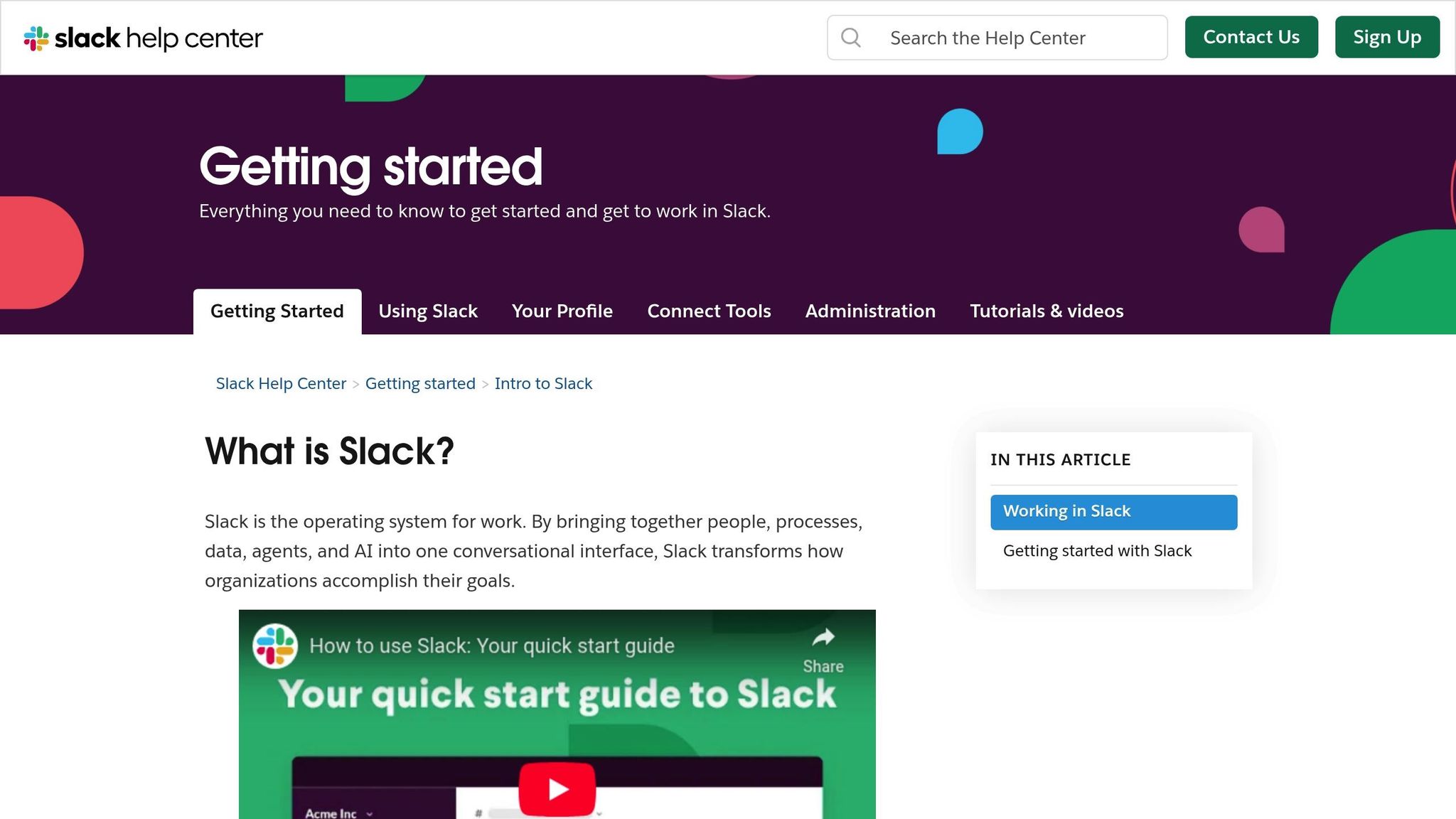
Slack’s journey from an MVP to a $27 billion company shows how outsourcing can speed up development and allow companies to focus on their strengths [13]. Their strategy revolved around two main areas:
| Focus Area | Outsourced Component | Impact |
|---|---|---|
| Brand Identity | Logo and Marketing Site | Helped establish a strong brand image |
| Core Platform | Web and Mobile Apps | Sped up the development process |
"By entrusting certain aspects of their operations to external partners, Slack was able to focus on its core strengths, iterate quickly on its product, and scale at an unprecedented pace." [13]
This approach became a model that WhatsApp would later follow on an even bigger scale.
WhatsApp‘s Development Approach

WhatsApp offers a clear example of how outsourcing can drive global expansion. Starting with a small team of 30 full-time and 5 part-time members [15], co-founders Jan Koum and Brian Acton made a game-changing decision in 2009. They brought in Russian developer Igor Solomennikov to create their iPhone app [16].
Key moments in WhatsApp’s story demonstrate the results of this strategy:
| Milestone | Achievement | Timeline |
|---|---|---|
| Initial Launch | iOS App Development | 2009 |
| User Growth | Surpassed 400M Active Users | 2014 [14] |
| Acquisition | Acquired by Facebook ($19B) | 2014 [16] |
Their success was built on two main tactics:
- Division of Focus: The in-house team managed customer-facing tasks, while outsourced teams handled app development [14].
- Fast Prototyping: Quickly rolled out new features based on user feedback [14].
Today, WhatsApp serves 2.78 billion users [14], with people opening the app an average of 22 times a day [15].
Next Steps and Summary
This section pulls together the key actions for scaling effectively, providing a clear path forward. A well-structured scaling process is the backbone of growth.
Checklist for Scaling Success
| Phase | Key Actions | Expected Outcomes |
|---|---|---|
| Planning | Define goals and milestones from your roadmap | Shared vision between in-house and outsourced teams |
| Infrastructure | Evaluate technical needs, adopt cloud solutions, and set up monitoring | A solid, growth-ready foundation |
| Team Integration | Create communication routines and encourage cross-team collaboration | A cohesive team working toward shared objectives |
These steps highlight the preparation and teamwork needed to transition smoothly toward a complete product.
"You have to decide what is the most important thing for your business in the short term, the middle term, and the long term, and allocate your resources and prioritize your spend accordingly." [18]
Here are some critical practices to adopt:
- Set Up Clear Communication Channels
Use tools like Slack or Microsoft Teams and schedule regular check-ins to ensure teams stay connected and aligned [19]. - Apply Quality Assurance Processes
Combine automated and manual testing to maintain high standards. - Track Key Metrics
Monitor important indicators such as user retention rates, customer lifetime value, system scalability, and response times during high demand [17].
Aligning everyone’s goals is pivotal. Cristina Mondini, Director of Product Management & Strategy at Salesforce, emphasizes this:
"It has to all start with stakeholder alignment… I fully believe that a clear and transparent process for transforming ideas into roadmap items is essential for building trust and collaboration among stakeholders. By visualizing this journey, we can ensure that everyone understands exactly how their feedback contributes to the product roadmap." [18]
Related Blog Posts
- Why Experienced Founders Choose Outsourced Development for Their Next MVP
- The Complete Beginner’s Guide to Outsourcing Your First Tech Product
- Offshore, Nearshore, or Onshore: Which Outsourcing Model Is Right for Your Startup?
- The Hidden Costs of DIY vs. Outsourced Development - and How to Avoid Them