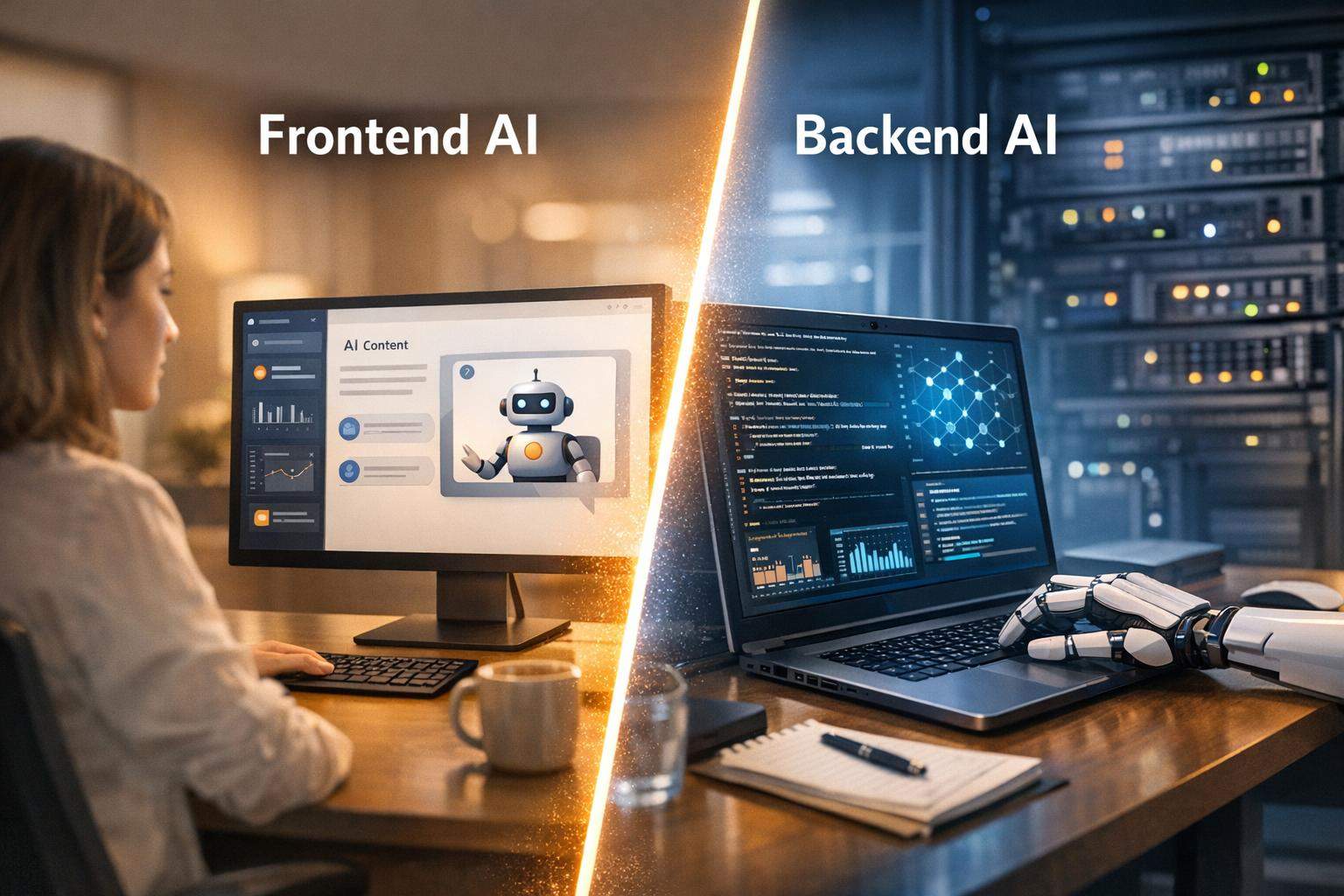
When AI Belongs in the Frontend vs the Backend
Compare frontend and backend AI trade-offs - latency, privacy, cost, and scalability - and learn when to run models on device or on servers.
Blog
Field notes on shipping AI-native systems with human engineering judgement: architecture, modernisation, automation, and the tradeoffs in between.

Compare frontend and backend AI trade-offs - latency, privacy, cost, and scalability - and learn when to run models on device or on servers.

How AI creates opaque models, data drift, and integration failures that add costly technical debt - and practical ways to manage it.

AI excels at ambiguous, unstructured, and multi-step workflows; use traditional engineering for predictable, security‑critical, and CRUD tasks.

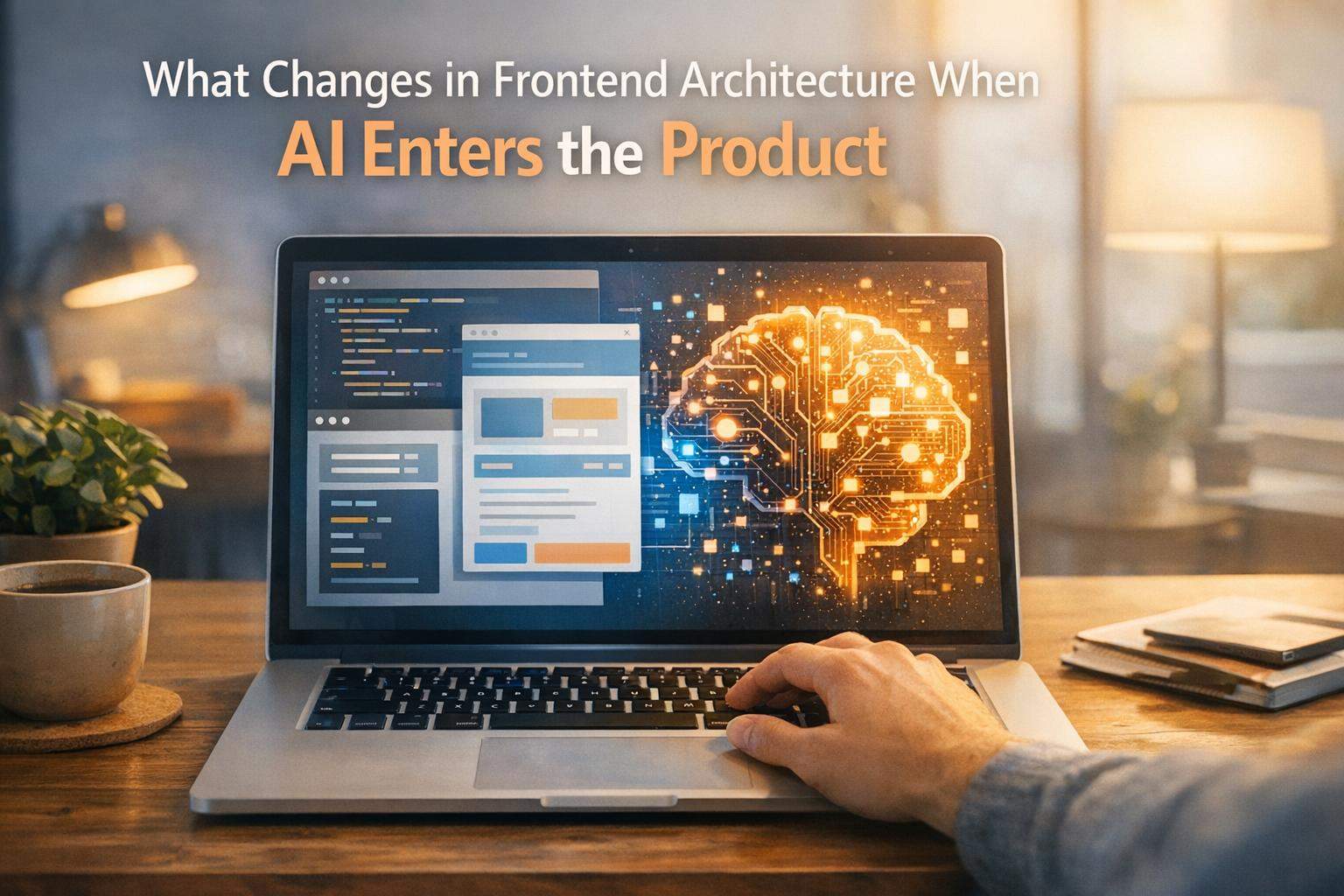
AI makes frontends handle model downloads, split AI/UI state, dynamic design systems, edge caching, and strict security.

Design interfaces that surface AI confidence, offer fallbacks, and collect feedback so users can understand, control, and trust uncertain AI outputs.

AI shifts users from step-by-step UIs to intent-driven, personalized experiences-forcing adaptive, multimodal interfaces and explainable AI to maintain trust.

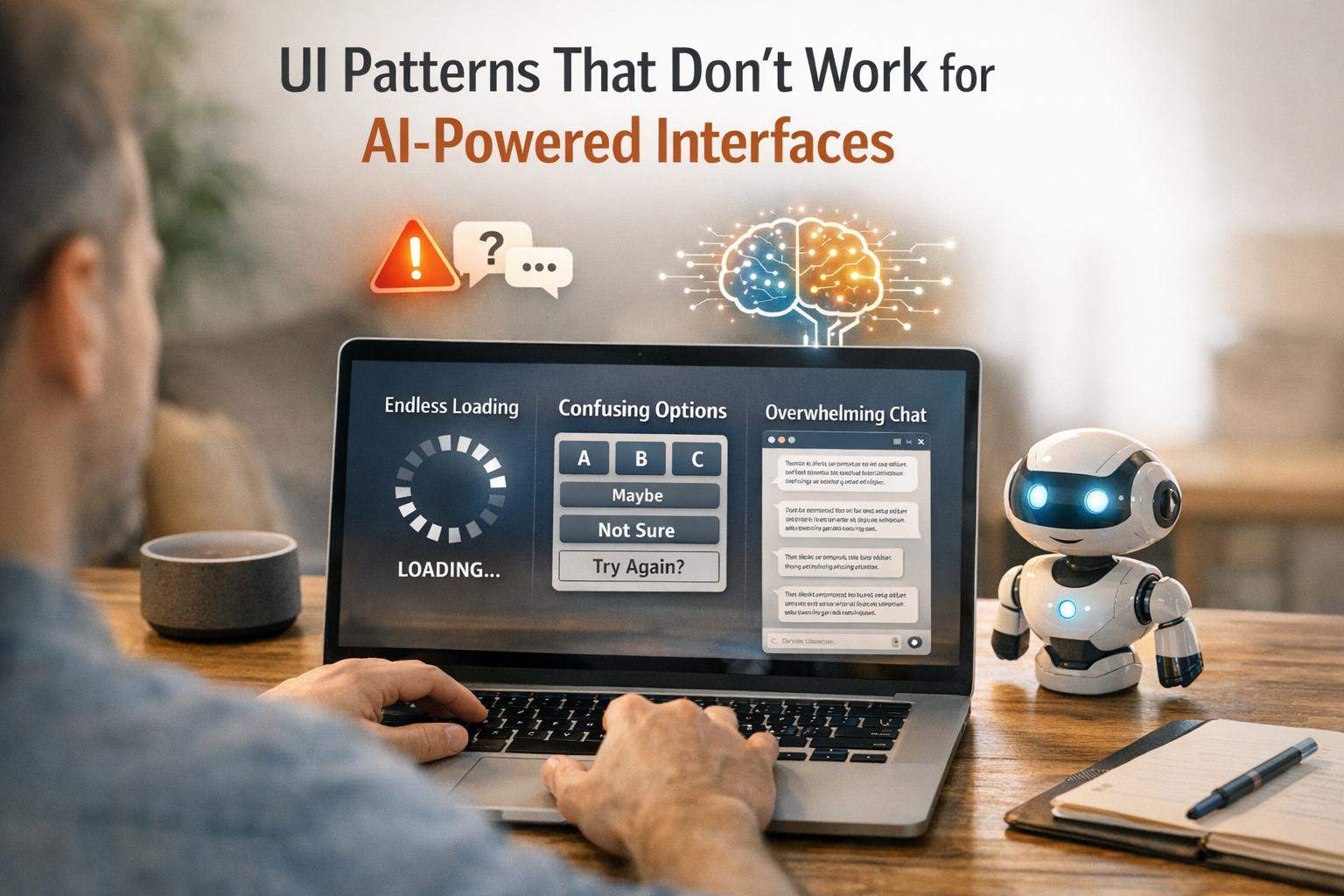
Explore why static forms, linear workflows, rigid navigation, vague prompts, and empty layouts fail with AI - and how to design adaptive, reliable interfaces.

Why AI’s probabilistic behavior, personalization, and learning require UX focused on transparency, user control, and feedback to build trust.

Demos dazzle but often die: vague goals, scaling, integration gaps, and siloed teams keep AI pilots from becoming production systems.

Messy data, inadequate infrastructure, skill gaps, and weak governance cause most AI pilots to fail; adopt a structured approach to reach production.

Adding AI can create technical debt, unpredictable outputs, and skill gaps-use phased trials, human oversight, and metrics to avoid overcomplicating products.

Practical guide to shipping AI features: reduce GPU costs, improve data quality, and prevent model drift with MLOps and monitoring.