MVP vs. Prototype: Understanding the Key Differences and When to Use Each
By Taher Pardawala · Co-Founder & Chief Executive Officer
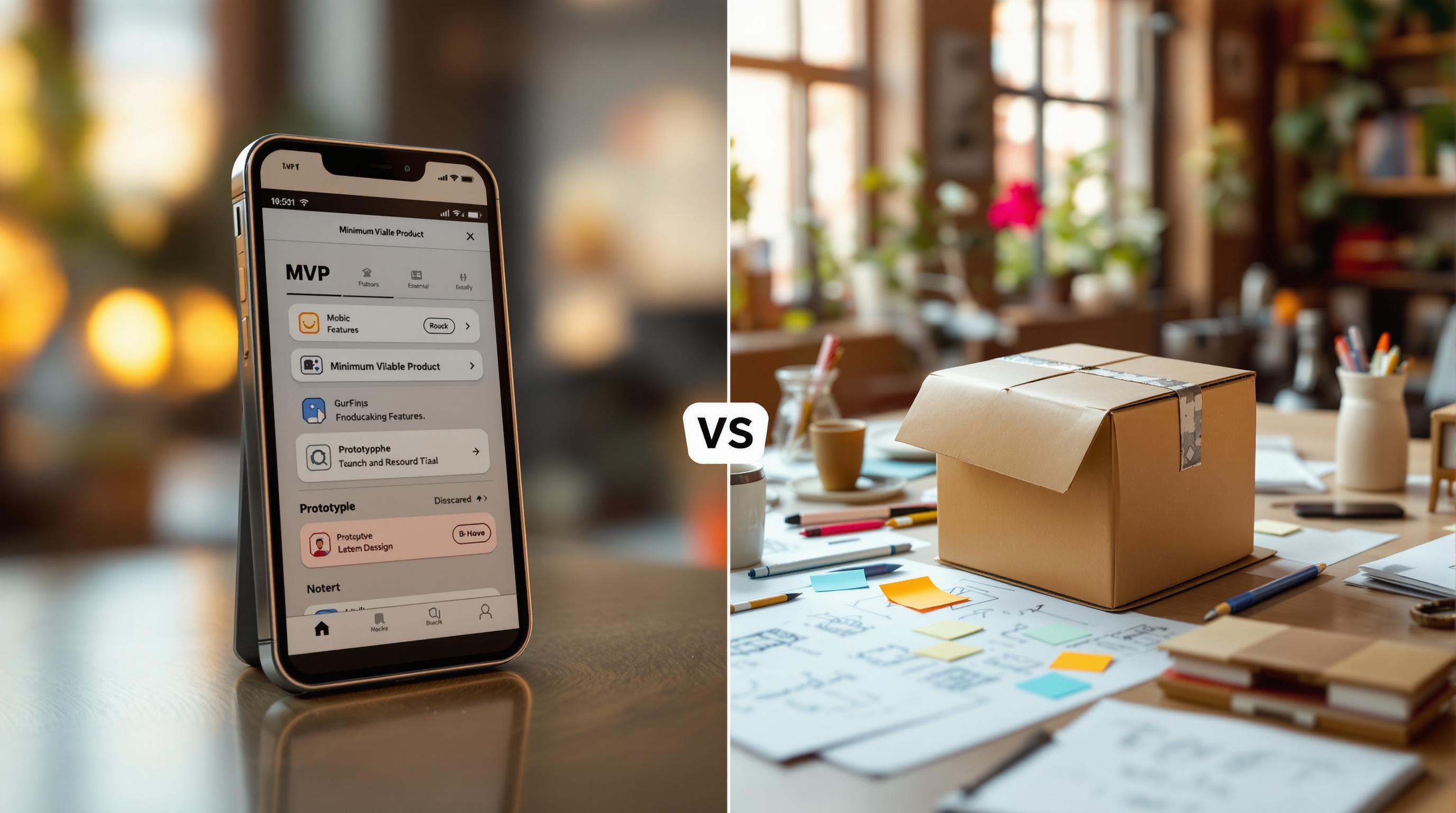
MVPs and prototypes are essential tools in product development, but they serve different purposes. Here’s a quick breakdown:
- MVP (Minimum Viable Product): A functional product with core features, designed to test market demand and gather user feedback. Example: Dropbox’s initial file-syncing MVP validated its main value.
- Prototype: An early model focused on design and usability testing, often non-functional and used internally to refine ideas. Example: Apple’s iPhone prototypes tested the touch interface.
Quick Comparison
| Aspect | MVP | Prototype |
|---|---|---|
| Development Stage | Later stages (Beta phase) | Early stages (Alpha phase) |
| Primary Users | Real customers | Internal teams and stakeholders |
| Functionality Level | Fully functional core features | Basic or non-functional |
| Testing Focus | Market fit and user behavior | Design and usability |
| Development Cost | Higher | Lower |
| Feedback Type | Real user data | Concept/design validation |
When to choose:
- Pick an MVP to validate market demand and gather real user insights.
- Use a prototype to refine designs, test concepts, or align stakeholders early.
Understanding these differences ensures you choose the right approach for your product’s stage and goals.
MVP vs Prototype Basics
Understanding MVPs
An MVP, or Minimum Viable Product, is a simplified, working version of your product that includes only its core features. It’s designed to test key assumptions and gather feedback from real users in practical settings [1]. A great example is Dropbox’s 2008 MVP, which focused exclusively on basic file-syncing to confirm its main value. For startups, MVPs are a smart way to reduce risks and learn efficiently, especially when resources are tight.
Understanding Prototypes
Prototypes are initial models used for internal testing. They’re all about visualizing and tweaking product ideas [1][3]. Unlike MVPs, prototypes don’t have to be fully functional. Tools like Figma or InVision are commonly used to create them [2]. For startups, prototypes are especially useful for gathering early feedback and aligning stakeholders before diving into full development.
Main Differences
Here’s how MVPs and prototypes differ:
| Aspect | MVP | Prototype |
|---|---|---|
| Development Stage | Beta phase - later stages | Alpha phase - early stages |
| Primary Users | Actual customers | Internal teams and stakeholders |
| Functionality Level | Fully functional core features | Basic or non-functional |
| Testing Focus | Market fit and user behavior | Design and usability |
| Development Cost | Higher | Lower |
| Feedback Type | Real user data | Concept and design validation |
Choosing between an MVP and a prototype depends on your product’s stage and goals. Prototypes are ideal for refining designs and gaining stakeholder approval, while MVPs are key for testing your market fit and gathering real-world user insights [1][2].
Core Functions
What MVPs Do
MVPs (Minimum Viable Products) aim to test market assumptions by delivering only the most essential features to real users. They help validate core business ideas through practical use and feedback.
Take Airbnb as an example. Their first MVP was a simple website offering air mattresses in San Francisco apartments. This allowed them to test whether people were willing to stay in strangers’ homes - a key concept for their business - before expanding further [1].
What Prototypes Do
Prototypes, on the other hand, focus on refining a product’s design and testing its technical feasibility. They help teams spot potential flaws, experiment with technical ideas, and align everyone involved in the project.
For instance, during the development of the iPhone, Apple created several prototypes to perfect the touch interface and overall user experience. This ensured both the design and technical aspects were solid before moving into production [2].
Side-by-Side Comparison
Here’s how MVPs and prototypes differ in their core functions:
| Function Area | MVP | Prototype |
|---|---|---|
| Focus Area | Market validation and user feedback | Design and technical feasibility testing |
| User Interaction | Real customers using actual features | Internal teams and stakeholders |
| Feedback Type | Usage data and market response | Design input and technical validation |
| Risk Assessment | Business and market risks | Technical and design risks |
The right choice - MVP or prototype - depends on your development stage and what you need to validate. If you’re exploring market demand and gathering user data, an MVP is the way to go. If you’re refining the design or testing technical concepts, a prototype is more appropriate [1][2]. Understanding these differences helps startups align their approach with their immediate goals, whether it’s proving market potential or perfecting the product.
Building Steps
MVP Creation Steps
Creating an MVP helps test business ideas quickly and efficiently. Start by defining a clear problem and conducting thorough market research. For instance, Yaza tested feature ideas before building them to avoid unnecessary work [1].
Focus on developing only the core features that address the main problem. This approach ensures the MVP is designed to evaluate key assumptions, helping teams make smarter decisions [2].
Prototype Creation Steps
Prototyping focuses on testing user interface (UI) designs using tools like InVision and Figma. Begin with basic sketches and wireframes, refining them through multiple iterations to improve the user experience before any coding begins.
Once the prototype is polished, the process shifts away from MVP development, as shown below.
Process Differences
Here’s how MVP and prototype development differ:
| Aspect | MVP Development | Prototype Development |
|---|---|---|
| Timeline | 3-4 months | 2-6 weeks |
| Tools & Focus | Development tools for market testing | Design tools for internal feedback |
| Resource Investment | Higher (involves full development) | Lower (focuses on design and testing) |
| Iteration Cycle | Driven by market feedback | Guided by input from stakeholders |
To execute these processes effectively, agile methods help teams stay flexible and responsive. Whether you’re testing market potential or refining a design, choose the right approach based on your immediate goals [2][4].
MVP vs Prototype: What’s the difference and what should you choose?
Making the Right Choice
Let’s break down how to decide between an MVP and a prototype, depending on your project’s goals and stage.
When to Pick MVP
An MVP works best when you need to test core functionality in real-world conditions. Opt for an MVP if:
- Market testing and generating revenue are top priorities.
- You need to demonstrate potential to investors.
- Your concept has been validated and is ready for user feedback.
- You’re prepared for a 90-day development timeline [1].
When to Pick Prototype
Prototypes shine when you want to refine the look and feel of your product before diving into development. They’re particularly useful in these scenarios:
| Scenario | Purpose |
|---|---|
| UI Testing | Allows quick design tweaks without coding. |
| Investor Pitches | Offers a clear visual without heavy costs. |
| Design Validation | Provides early feedback on usability. |
| Concept Testing | Tests assumptions without major risks. |
By understanding these use cases, you can decide which approach aligns better with your project.
Choice Guidelines
Here’s how to evaluate your options:
- Project Stage and Goals
- Go with an MVP for market validation and revenue-focused testing.
- Use a prototype to refine designs and align stakeholders [1].
- Available Resources
- Prototypes are quicker and less resource-intensive.
- MVPs demand more effort but offer deeper market insights [4].
- Risk Management
- Prototypes help you tackle design and technical risks early.
- MVPs let you test business and market risks with real users [1].
Choosing wisely ensures your project moves forward efficiently while making the most of your resources. Focus on your immediate goals and constraints to find the best fit.
Conclusion
Main Points
Grasping the differences between MVPs and prototypes is key to navigating product development effectively. An MVP is a functional product aimed at testing market assumptions and gathering user feedback, while a prototype focuses on refining concepts and designs before committing significant resources.
The core difference lies in their purpose: MVPs assess market potential through real-world use, whereas prototypes are about evaluating design ideas and technical possibilities. These distinctions shape how they’re developed, the resources they demand, and the outcomes they produce [1].
With this understanding, you can better align your approach to your product development goals.
Next Steps
Decide on your approach based on your current goals. If your main focus is market validation and you have the resources, go for an MVP [2]. For refining ideas and testing designs in the early stages, a prototype is the way to start [3].
FAQs
What is the difference between a prototype and an MVP?
The key difference lies in their purpose, functionality, and audience. A prototype is used to test and refine designs in the early stages of development, while an MVP (Minimum Viable Product) focuses on testing a product’s market potential with real users.
"MVPs validate core functionality and market fit, while prototypes refine design and usability" [1].
In design-heavy fields, prototypes help confirm ideas and concepts early on. For software and similar industries, MVPs are aimed at assessing market demand and gathering feedback from users [1][3].
Here’s how to decide:
- Prototype: Ideal for refining design concepts during the initial development phase [1][3].
- MVP: Best when you’re ready to test market demand and collect insights from actual users [1][4].
Choosing the right approach depends on your product’s stage and goals. Prototypes focus on design validation, while MVPs test market fit - each serves a distinct purpose [1][5].